
The Bolt-830CRH is a low-power MIPI Camera, and Vadzo Imaging is positioning it with the Onsemi AR0830 sensor and 4K autofocus imaging for battery-powered retail vision systems. A camera on a shelf edge, a handheld scanner, or a cordless cart has no wall outlet, and every milliwatt it uses comes out of a battery that someone must change. Such a camera spends most of its life watching nothing happen. The Bolt-830CRH answers that with a super low power mode, in which the sensor waits until motion is detected, and it wakes to capture sharp 8MP frames when something moves. A voice coil motor focuses the lens across the varying distances of aisles and shelves, line-interleaved HDR and eDR modes handle bright windows and dim corners, and an on-board ISP finishes the picture. As a 4K Autofocus MIPI CSI-2 Camera and an 8MP Low Power MIPI CSI-2 Camera, it saves power where nothing is happening.
FORT WORTH, TX / ACCESS Newswire / November 25, 2026 / Vadzo Imaging, a provider of embedded vision camera products for OEMs and system integrators, today positions the Bolt-830CRH as a Low Power MIPI Camera with 4K autofocus imaging for battery-powered retail vision systems. Built on the Onsemi Hyperlux LP AR0830 sensor, it combines an on-board ISP, line-interleaved HDR and eDR modes, voice coil motor autofocus, and wake-on-motion with a super-low-power mode. Vadzo presents a 4K Autofocus MIPI CSI-2 Camera and an AR0830 VCM Autofocus MIPI CSI-2 Camera for retail device makers, with guidance on power budgets, focus, and platform choice.
Why a Low Power MIPI Camera Matters for Battery-Powered Retail Devices
Retail is full of places where a camera would help and a power cable would not fit. A shelf edge has no outlet, a handheld device is carried across the store, a cart rolls through aisles, and a cordless display must be moved on a whim. Retailers want camera units there to read prices and labels, to notice empty shelves, to count people, and to recognize products. A camera that needs a cable limits where those jobs can be done, and a camera that drains a battery in a day creates a maintenance task for every unit in every store.
Most of a retail camera’s time is idle. Aisles are quiet for long periods, shelves change slowly, and a device in a stockroom sees nothing for hours. A camera that streams continuously spends power on frames that show nothing, and the sensor, the processor, and the memory all take their share. Savings come from doing nothing well. A sensor that can drop into a very low power state, and wake when something moves, turns hours of idle into days or weeks of battery life.
The scene itself is hard for a small battery camera. Distances change from a few tens of centimeters at a shelf to meters along an aisle, so a fixed focus lens is sharp at one distance and soft at the rest. Lighting mixes store lamps with windows and bright displays. Labels and prices are printed small. A camera that wakes up must capture a usable image quickly, with the focus and the exposure right, because a blurred or burnt frame wastes the energy spent to take it.
The platform completes the picture. A camera is one part of a device, and the processor that reads it often draws far more power than the camera does. The choice of host decides how long a battery lasts, and a designer must look at the whole chain, from the sensor to the computer to the radio, to know whether a battery-powered design is practical. Teams that choose a camera for its low-power mode and discover the host’s appetite later must redesign, and a clear budget at the start saves that.
How a Low Power MIPI Camera Saves Energy by Sleeping Until Motion
The Bolt-830CRH is built on the Onsemi Hyperlux LP AR0830, an 8MP sensor that records 4K video, with an on-board high-performance ISP that finishes the picture inside the module. The sensor has a super low power mode, called SLP, in which it stays until it detects motion. In that mode, the sensor does almost nothing, and a small circuit watches for changes in the scene. When motion appears, the sensor wakes, and the camera captures. A simple model shows the effect on battery life. The average power equals the sleep power plus the share of time spent awake times the extra power drawn while awake. The figures below are hypothetical, chosen only to show the arithmetic, and they are not specifications of this camera.
Suppose, hypothetically, that the camera draws 1.0 watt while active and 10 milliwatts in the super low power mode, and that something moves in view for 2 percent of the time. The average power is then about 0.01 plus 0.02 times 0.99, which is about 30 milliwatts. A battery of 7.4 watt-hours, for example, a 2,000 milliamp-hour cell at 3.7 volts, would last about 250 hours, or more than 10 days, against about 7 hours if the camera ran continuously. Real numbers will differ, and the savings depend on how busy the scene is. In a scene that is active 20 percent of the time, the same model gives about 0.21 watts and about 35 hours. Teams should measure the real power in each mode and the real activity of their scene.
The host often decides the outcome. NVIDIA Jetson modules draw several watts when they run, so a 7.4 watt-hour battery would power one for an hour or two, and even a module in a low-power mode uses more than the camera in the example. Battery-powered designs therefore favor small platforms, such as a Raspberry Pi-class computer, or a host that sleeps along with the camera and wakes on the same event. The Bolt-830CRH connects over MIPI CSI-2 to platforms that include Raspberry Pi, NVIDIA Jetson Orin NX, Orin Nano, Xavier NX, and AGX Orin, and a designer can choose the platform that fits the power budget, using the larger Jetson modules where a cart or a charging dock supplies the power. After a wake, the sensor must start streaming, the exposure must settle, the focus must be found, and the host must be ready, so teams should measure the time from motion to the first usable frame.
Autofocus matters for the usefulness of each wake. A voice coil motor moves the lens electrically and precisely, so the camera can bring a shelf label or a face into focus across varying object distances. Holding a lens at a position with a voice coil draws current, and moving it takes a burst of energy, so teams should confirm the autofocus power and how the focus behaves after a wake. A worked example shows why focus matters on a shelf. A 4K frame has 3840 pixels across. A shelf section 600 millimeters wide then gives about 0.16 millimeters per pixel, so a price label with characters 3 millimeters tall spans about 19 pixels, enough for most text recognition, while a section 1,200 millimeters wide gives only about 10. The device must therefore get close and focus, or the labels become unreadable. The figures are illustrative.
The quality of the wake decision deserves attention, since it sets both the battery life and the usefulness of what is captured. Motion detection in a low-power mode works on a coarse view of the scene, looking for change in brightness over a region, and it cannot tell a person from a shadow or a swinging door. A threshold that is too sensitive wakes the camera for nothing and drains the battery, and one that is too dull misses a shopper who walks past quickly. Retail aisles add their own sources of change, such as flickering lamps, electronic price labels that refresh, and reflections from glass doors. A good design lets the installer set the sensitivity and the region of interest, logs every wake with a reason code where possible, and lets the host decide within a few frames whether to keep the capture or go back to sleep. A short hold time after each event prevents the camera from falling asleep in the middle of a long visit.
The uses named for this camera share a need for compact, low-power imaging. A videoconferencing device wants a sharp, well-exposed picture from a small enclosure. A wearable device runs on a small battery and must sleep when nothing happens. An in-store camera reads shelves and watches aisles, and a facial recognition system needs even exposure on faces that stand in front of bright windows. Each of these handles images of people or personal data, and the operator remains responsible for consent, retention, and the laws that apply where the device is used. A design that keeps only what the task needs, processes images on the device where possible, and deletes frames promptly also saves power, since it moves and stores less data.
Lighting adds the last challenge. The sensor offers line interleaved HDR, abbreviated LI-HDR, which alternates two exposure settings across the rows of one frame and combines them, so a bright window and a dark aisle stay readable together, without the ghosting that sequential exposures can show on moving subjects, at the cost of some vertical detail. It also offers enhanced dynamic range, abbreviated eDR, a single exposure mode for scenes of moderate contrast and fast motion. A battery-powered device can choose the mode that suits the scene, and a lighter mode usually costs less processing. A 4K frame at 10 bits per pixel and 30 frames per second needs about 2.5 gigabits per second across the MIPI lanes, an illustrative figure that depends on the format and the lane count, so teams should confirm the available modes and lane options against the product documentation.
Pixel size shapes the low-light behavior of a retail camera. The sensor has a 1/3.2 inch optical format with 1.55 micron pixels, so each pixel has an area of about 2.4 square microns, roughly half that of a 2.2 micron pixel. Smaller pixels collect less light each, so a dim aisle shows more noise unless the lens has a wide aperture, the lighting is steady, or the HDR and ISP settings favor sensitivity. A shelf lit by overhead lamps may be fine, and a stockroom may not be. Teams should test in the darkest place the device will work, and a short exposure with moderate gain usually beats a long exposure that blurs a moving hand. The camera’s on-board ISP also takes work off the host, since the host receives a processed frame, which matters on a battery.
A short measurement plan keeps battery claims honest. Teams should power the device from a supply that logs current, and record the current in each state, which are asleep, waking, capturing, focusing, and transmitting, and also the time spent in each state during a normal day. They should count how often the sensor wakes without anything of interest, since shadows, doors, and carts can trigger it, and they should tune the motion threshold until false wakes are rare. They should run the whole device in the store for at least a week, in the real temperature, with the real radio and the real host, and compare the measured battery life with the model. The gap between the two usually shows where the energy goes, and in many designs it is the radio and the host, not the sensor, that deserve attention.
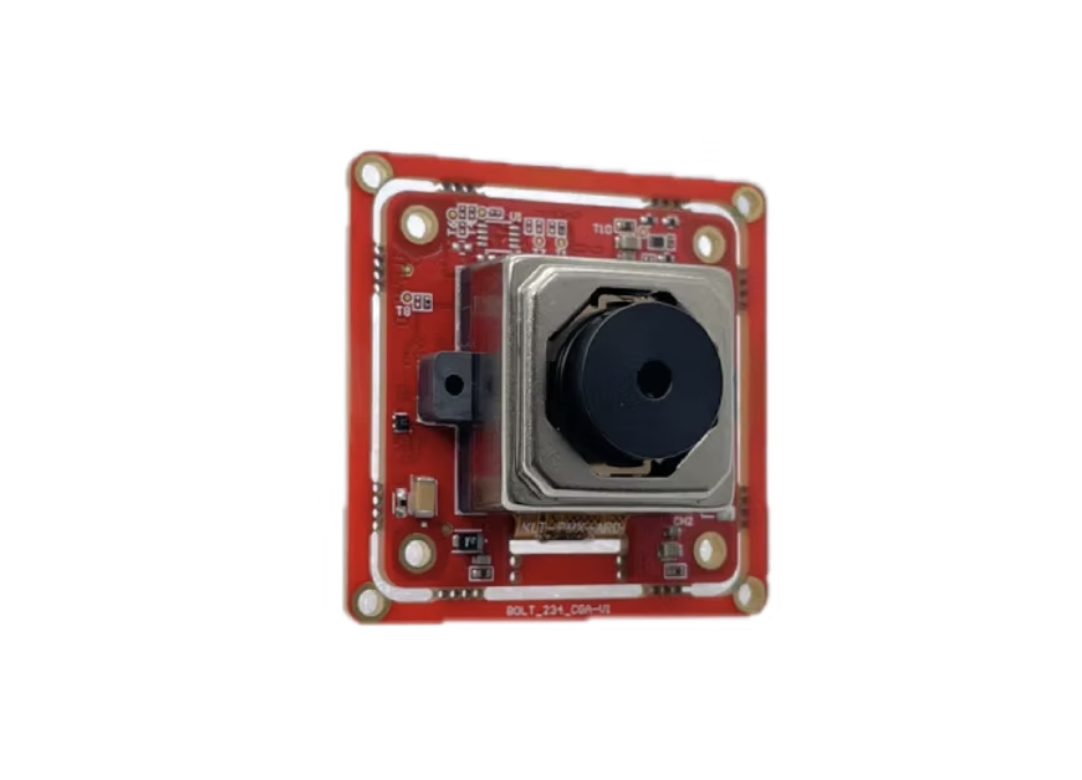
Product Overview: Low Power MIPI Camera with 4K Autofocus for Battery Powered Retail Vision
The Bolt-830CRH is an 8MP color MIPI module built on the Onsemi Hyperlux LP AR0830 sensor and positioned for battery-powered retail vision. As an 8MP LI-HDR MIPI CSI-2 Camera, it handles bright and dark regions together, and as an AR0830 Color MIPI CSI-2 Camera, it records full color. The 8MP Low Power MIPI CSI-2 Camera designation covers its super low power mode and wake-on-motion. The module also serves as an 8MP Autofocus MIPI CSI-2 Camera, an AR0830 Autofocus MIPI CSI-2 Camera, a 4K VCM MIPI CSI-2 Camera, an 8MP VCM MIPI CSI-2 Camera, a 4K LI-HDR MIPI CSI-2 Camera, an AR0830 LI-HDR MIPI CSI-2 Camera, a 4K Color MIPI CSI-2 Camera, an AR0830 Rolling Shutter MIPI CSI-2 Camera, a 4K Rolling Shutter MIPI CSI-2 Camera, and an AR0830 Low Power MIPI CSI-2 Camera for designs that need a standard MIPI interface.
Key specs: 8MP (3840 x 2160) Max Resolution | Onsemi Hyperlux LP AR0830 1/3.2 inch Sensor Format | 1.55 micron Pixel | Color with Rolling Shutter | MIPI CSI-2 Interface | VCM Autofocus Optics
Key Capabilities of the Low Power MIPI Camera
4K HDR Imaging with Hyperlux LP AR0830
The camera is a 4K HDR MIPI camera built on the Onsemi Hyperlux LP AR0830 sensor family. The 8MP frame of 3840 x 2160 pixels puts enough pixels on price labels, faces, and products at shelf distance, and the sensor is engineered for strong performance under different lighting conditions. A rolling shutter reads the image row by row, which suits most retail scenes, and fast motion can show slight skew.
On-Board High-Performance ISP
The on-board image signal processor finishes the picture inside the module, so the host receives a processed frame and spends less power on image processing, which helps battery-powered platforms. Teams that need raw data and custom tuning should discuss a raw sensor module with Vadzo.
Line Interleaved HDR
Line interleaved HDR alternates exposure settings across the rows of one frame and combines them, so bright windows and dark corners stay readable together, with no ghosting of moving subjects. The cost is some vertical detail where both exposures are needed. Teams should record real store scenes with the mode on and off.
Enhanced Dynamic Range
Enhanced dynamic range is a single exposure mode for scenes of moderate contrast, with no frame combining, which suits fast motion and lighter processing. A device can switch between it and the line interleaved mode in software as the lighting changes through the day.
VCM Autofocus
A voice coil motor allows precise and automatic focus adjustment across varying object distances, so a shelf label, a product, or a face is sharp at the working distance. Holding a lens position and moving it both draw power, so teams should confirm the autofocus power and the focus behavior after a wake, and test at the nearest and farthest distances of the store.
Wake on Motion with Super Low Power Mode
The sensor remains in a super low power mode, called SLP, until motion is detected, which saves energy where nothing is happening. In the hypothetical model, a scene that moves 2 percent of the time cuts the average power by about 97 percent. The motion threshold should be tuned in the real aisle, since carts, doors, and shadows can wake the sensor, and the time to the first usable frame should be measured.
Excellent Performance Under Different Lighting
Retail lighting varies from bright windows to dim stockrooms, and the camera pairs back illuminated Hyperlux LP pixel technology, an ISP, and two HDR modes to cope with it. Teams should test at the darkest and brightest places in the store, and add light where it can be done safely, since light usually helps more than any setting.
Raspberry Pi and NVIDIA Jetson Platform Support
The camera connects over MIPI CSI-2 to platforms such as Raspberry Pi, NVIDIA Jetson Orin NX, Orin Nano, Xavier NX, and AGX Orin, so a team can choose a small platform for a battery device or a powerful one for a cart. It works as an NVIDIA Jetson MIPI CSI-2 Camera, and teams should confirm drivers and lane settings for each platform. Its use cases include videoconferencing, wearable devices, in-store retail, and facial recognition, where privacy rules apply.
“A battery-powered camera wins by being idle. The Bolt-830CRH can wait in a super low power mode until something moves, and then it wakes to capture 8MP frames with the right focus and exposure. We are plain about the limits. A camera is only one part of the power budget; the host often draws more than the camera does, and the time from motion to the first good frame must be measured on the real device. We help customers build the budget before they commit to a design, and we encourage them to choose the platform that fits their battery, from a Raspberry Pi class computer to a Jetson module on a cart.” – Alwin Vincent, Product Manager, Vadzo Imaging.
Applications for Battery Powered Retail Vision in Practice
Battery Powered and Cordless Retail Devices
Shelf edge units, handheld scanners, and cordless carts have no outlet. The Bolt-830CRH works as a battery-powered Retail MIPI CSI-2 Camera that sleeps until motion and wakes to capture, and as a Cordless Retail Vision MIPI CSI-2 Camera on carts and displays that move around the store. Teams should set the motion threshold in the real aisle and measure the battery life over a full week of store traffic, including the quiet hours after closing and the busiest hour of the weekend.
Smart Shelf and Portable Systems
Smart shelves watch stock levels, read prices, and notice gaps, and portable devices go where the work is. The camera serves as a Smart Shelf MIPI CSI-2 Camera and a Portable Retail MIPI CSI-2 Camera, where autofocus keeps labels readable at changing distances. A 600-millimeter-wide shelf section gives about 19 pixels across a 3-millimeter character in the illustrative example, and teams should plan the working distance of a handheld or cart-mounted unit so that each label falls inside that width.
Retail Vision Systems
Stores combine fixed camera units, shelf units, and handheld devices into one view of what is on the shelves and who is in the aisles. The module functions as a Retail Vision Systems MIPI CSI-2 Camera that feeds recognition and analytics software, and it keeps power low where the scene is quiet. Privacy rules apply to images of people and belong to the retailer, and a clear policy on what is kept is part of a sound design.
Frequently Asked Questions
Q: How does wake on motion save battery power?
A: Vadzo Imaging explains that the sensor stays in a super low power mode until it detects motion, so it uses very little energy while nothing happens. The average power is the sleep power plus the share of time awake times the extra power while awake. For example, hypothetically, a camera that draws 1.0 watt active and 10 milliwatts asleep, in a scene that moves 2 percent of the time, averages about 30 milliwatts. Real figures differ, and Vadzo Imaging recommends measuring them.
Q: Can a battery-powered retail device use an NVIDIA Jetson module?
A: It can, with care. Jetson modules draw several watts when they run, so a small battery powers one for only a few hours, and the host often uses more power than the camera. Battery designs favor small platforms such as a Raspberry Pi-class computer, or a host that sleeps and wakes with the camera. Larger Jetson modules suit carts and docks with a power supply. Vadzo Imaging helps customers build the power budget for the platform they choose.
Q: Why does a shelf camera need autofocus?
A: Distances change from tens of centimeters at a shelf to meters along an aisle, and a fixed focus lens is sharp at only one of them. Autofocus follows the distance, so labels, products, and faces stay readable. For example, a 4K frame over a shelf section 600 millimeters wide gives about 19 pixels across a 3-millimeter character, but only about 10 over a 1,200-millimeter section. Vadzo Imaging recommends testing focus at the nearest and farthest working distances, and an 8MP VCM MIPI CSI-2 Camera should be tested again after a wake, since the lens must find focus before the first useful frame.
Q: What is the difference between line interleaved HDR and enhanced dynamic range?
A: Line interleaved HDR records two exposure settings in one frame by alternating them across rows and combining them, so bright and dark regions stay readable together, with some loss of vertical detail. Enhanced dynamic range uses a single exposure, so it needs no combining and suits fast motion and moderate contrast. A device can switch between them as the lighting changes. Vadzo Imaging suggests recording real scenes in each mode and comparing them.
Q: Why should retailers choose Vadzo Imaging as their low-power MIPI camera manufacturer?
A: Vadzo Imaging offers more than a camera module built around a capable sensor. Retail device makers receive a module with a super low-power mode, autofocus, two HDR modes, and an on-board ISP, with candid guidance on power budgets, host choice, and the details to confirm in the documentation, plus engineering support for lens selection, firmware customization, and enclosure design. Vadzo Imaging maintains evaluation kits with no minimum order requirement, so teams can measure battery life on their own device before committing to volume production.
Availability
The Bolt-830CRH Low Power MIPI Camera, built on the Onsemi Hyperlux LP AR0830 sensor, is available now for evaluation and production orders. Evaluation kits include the camera module, a cable, and platform documentation, with no minimum order requirement. Retail device teams can measure power in each mode, time the wake from motion to the first usable frame, and test focus on their own shelves before committing to a production bill of materials, which tells them more than a datasheet comparison alone. Teams that need a different platform or configuration can ask Vadzo to review the setup. Browse the full range of MIPI camera options at Vadzo’s website or discuss OEM integration requirements.
About Vadzo Imaging
Vadzo Imaging is a global provider of embedded vision solutions and delivers high-performance camera technologies and imaging platforms for applications in robotics, industrial automation, UAVs, edge AI, and medical systems. Its products are designed for seamless integration with leading embedded platforms including NVIDIA Jetson, Rockchip, Raspberry Pi, and NXP i.MX. Vadzo supports customers through hardware customization, firmware development, and module-level drivers, enabling faster development and deployment of vision based systems across MIPI, USB, GigE, Wi-Fi, and SerDes camera interfaces.
Media Contact
Alwin Vincent
Vadzo Imaging
Email: alwin@vadzoimaging.com
LinkedIn: Vadzo Imaging
YouTube: Vadzo Imaging
X: Vadzo Imaging
SOURCE: Vadzo Imaging
View the original press release on ACCESS Newswire
Media gallery