A growing emphasis on dose-sparing strategies and equitable vaccine access has renewed global interest in ID vaccine delivery. A recent, peer-reviewed publication in Qeios1 evaluated the evidence on implementation of novel technologies for ID delivery of fractional-dose inactivated polio vaccine (fIPV). Titled “A Narrative Review and Perspective on Implementation Research on Intradermal Delivery Methods for Fractionated-Dose Inactivated Poliomyelitis Vaccine”, the publication examined available ID delivery options, associated implementation challenges and benefits, and the potential for broader application of ID delivery across additional vaccines, including rabies, malaria, and monkeypox (mpox).
This press release features multimedia. View the full release here: https://www.businesswire.com/news/home/20260519428976/en/
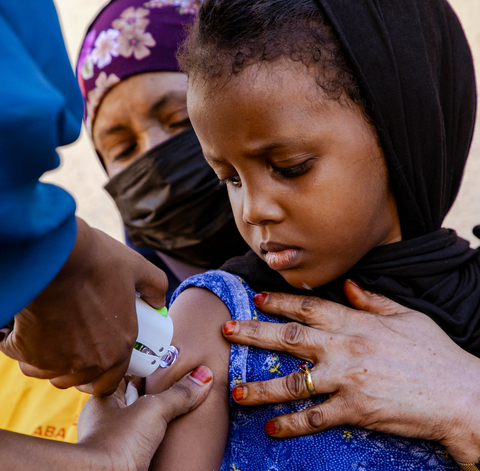
Child receives polio vaccine injection with the Tropis Needle-free Injection System during a vaccination campaign in Somalia.
Recent trends in vaccination policy, as seen in the Global Polio Eradication Initiative and the mpox pandemic, have reinforced that vaccine administration to the dermis (ID) is a valuable alternative to intramuscular administration with needles. However, traditional ID delivery using needles (the Mantoux technique), remains challenging to implement at scale due to the technical difficulty of administration and the extensive training required to ensure consistent dose accuracy and injection depth. Operational constraints have hindered the broader adoption of ID vaccination, particularly in settings with healthcare workforce constraints. This highlights the need for alternative technologies that reduce training burden, improve safety and efficiency, and, above all, improve the user and patient experience, an important success factor in any vaccination setting.
To assess the performance of novel ID delivery approaches, a literature search was conducted using PubMed to identify relevant publications between January 2015 and June 2024 using the terms “inactivated polio vaccine” and “intradermal delivery”. Of the 59 publications identified, 14 met the criteria for original studies in human subjects using novel delivery methods for ID administration of commercially available fIPV vaccines. Evaluated delivery methods included needle-free injectors, microneedle-based technologies, and needle adapters. The authors found that the most reported implementation factors included child’s distress associated with injection; acceptability (preference) with vaccinators; acceptability (preference) with caregivers; immunization coverage; training requirements and adequacy; vaccine wastage; ergonomics; acceptability among adult recipients; and feasibility.
As the only commercialized, WHO-prequalified ID technology in the review, Tropis was uniquely identified to improve campaign and routine immunization coverage, reduce total immunization costs, decrease training and administration time, and achieve high levels of acceptability with caretakers and healthcare workers.2,3 Unlike micro-array patches, Tropis has the advantage of compatibility with traditional vaccine vial presentations without the need for reformulation. In reference to endemic country use, WHO has noted that the use of fIPV is well-supported in specific areas where the deployment of injectors can improve vaccine demand and enhance overall coverage with both oral polio vaccine (OPV) and inactivated polio vaccine (IPV).4
“Tropis is commercially available and has demonstrated its ability to perform efficiently in large scale campaigns, with more than 20 million Needle-free Tropis Syringes provided to date for campaigns and supplemental immunization activities across Asia and Africa,” said Paul LaBarre, Senior Vice President – Global Business Development, PharmaJet. “With compelling data supporting improved coverage, cost savings, and high acceptability, we are seeing increased interest in expanded use of Tropis in polio vaccine programs and for new applications such as mpox and rabies immunization.”
For more information go to the PharmaJet website: https://www.pharmajet.com.
Refer to Instructions for Use to ensure safe injections and to review risks.
|
1 |
Bakunawa, GB et al, A Narrative Review and Perspective on Implementation Research on Intradermal Delivery Methods for Fractionated-Dose Inactivated Poliomyelitis Vaccine, Qeios, 2026 |
|
|
2 |
Mohan, et al, Evaluating the Impact of Needle-Free Delivery of Inactivated Polio Vaccine on Nigeria’s Routine Immunization Program: An Implementation Hybrid Trial, Vaccines, 2025 |
|
|
3 |
Daly et al, Needle-free injectors for mass administration of fractional dose inactivated poliovirus vaccine in Karachi, Pakistan: A survey of caregiver and vaccinator acceptability, Vaccine, 2020 |
|
|
4 |
World Health Organization. (2024, Oct 2). Report of the Sixteenth Meeting of the Technical Advisory Group on Poliomyelitis Eradication in Afghanistan and Pakistan (TAG), Doha, Qatar 22-25 May 2024. Accessed online: https://reliefweb.int/report/afghanistan/report-sixteenth-meeting-technical-advisory-group-poliomyelitis-eradication-afghanistan-and-pakistan-tag-doha-qatar-22-25-may-2024 (accessed on 30 December, 2024). |
About PharmaJet
The PharmaJet mission is to improve the performance and outcomes of injectables with our enabling technology that better activates the immune system. We are committed to helping our partners realize their research and commercialization goals while making an impact on public health. PharmaJet Precision Delivery Systems™ can improve vaccine and immunotherapy effectiveness, allow for a preferred patient and caregiver experience, and offer a proven path to commercialization. They are also safe, fast, and easy-to-use. The Stratis® System has U.S. FDA 510(k) marketing clearance, CE Mark, and WHO PQS certification to deliver medications and vaccines either intramuscularly or subcutaneously. The Tropis® System has CE Mark and WHO PQS certification for intradermal injections. They are both commercially available globally for prophylactic and therapeutic applications. For more information or if you are interested in partnering with PharmaJet visit https://www.pharmajet.com or contact PharmaJet here. Follow us on LinkedIn.
About Qeios
Qeios is a free, multidisciplinary publishing platform built around an open post-publication peer review model. Articles are posted first as preprints and then reviewed publicly, with reviewers’ reports published alongside the work and assigned citable DOIs. Reviewers’ public feedback and ratings help inform readers and support authors in improving their work.
View source version on businesswire.com: https://www.businesswire.com/news/home/20260519428976/en/
Media gallery