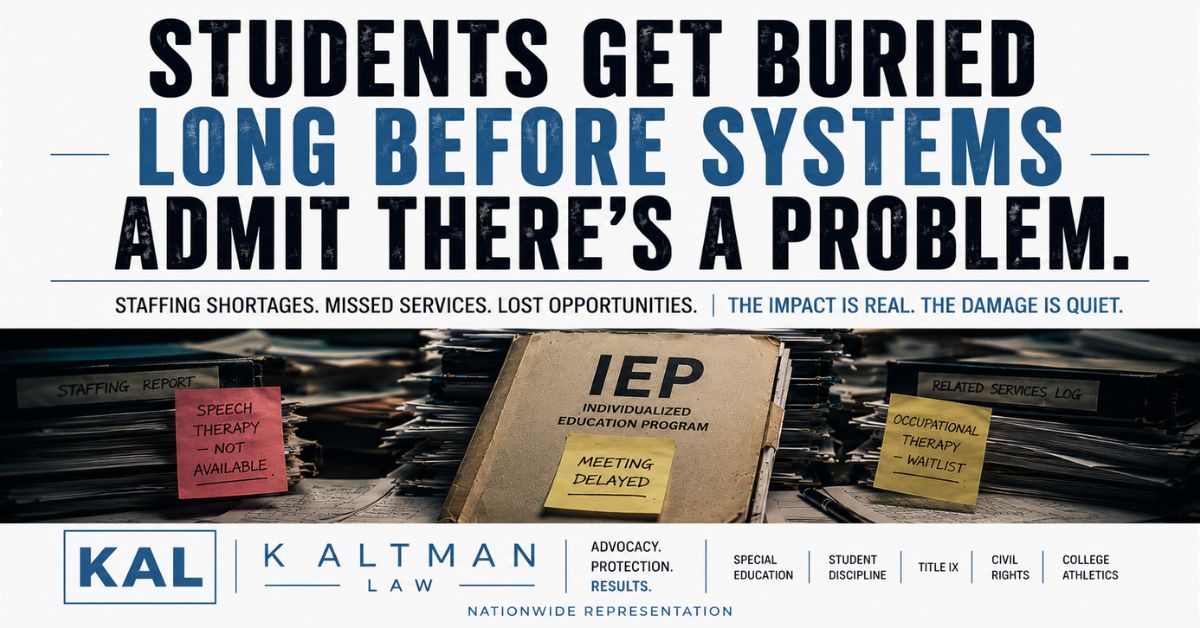
Special education staffing shortages are not just operational problems — they can directly affect whether students receive legally required support.
EAST STROUDSBURG, PA, UNITED STATES, May 19, 2026 /EINPresswire.com/ — A recent local report on grant funding supporting an accelerated special education teacher certification program highlights a broader issue affecting schools and families nationwide: the continuing need for qualified special education personnel. You can read about it here.
According to the FOX56 report, nearly $1 million in grants will support an accelerated special education teacher certification program. Although the report focuses on one program, the larger policy concern extends beyond any single institution. Staffing shortages and teacher pipeline pressures can directly affect IEP implementation, service consistency, classroom support, and the overall educational experience of students with disabilities.
Workforce Development Has Legal and Practical Consequences:
Special education staffing is not only an operational issue. It also has implications for how districts meet obligations tied to evaluations, accommodations, specially designed instruction, related services, and timely implementation of IEP commitments. Efforts to expand certification pathways may help address shortages, but schools and training programs should still focus on quality, preparedness, supervision, and retention.
Keith Altman, Founder and Managing Partner of K Altman Law, stated: “Programs designed to strengthen the special education workforce can be meaningful for students and schools, particularly where service gaps affect day-to-day educational access. The long-term goal should be a system that supports both capacity and quality so students receive services in a consistent and legally sound manner.”
Why This Matters for Families:
When special education staffing is stretched, families may notice delays, inconsistent implementation, or changes in the level of support available to students. Even positive pipeline investments deserve close attention because families benefit from understanding how staffing changes may affect actual service delivery. School systems also benefit from proactive planning that aligns workforce development with legal compliance and student needs.
What Families and Students Should Do Now:
• Review your student’s IEP or accommodation plan and track whether services are being delivered consistently.
• Ask how staffing changes may affect classroom support, related services, and implementation timelines.
• Document concerns about missed services, changing support levels, or communication gaps so questions can be addressed promptly.
K Altman Law represents students, families, faculty, and education professionals in matters involving special education, student discipline, Title IX, civil rights, and college athletics issues nationwide.
Disclaimer: This release is for general informational purposes only and does not constitute legal advice. Prior results do not guarantee future outcomes. Outcomes vary, and jurisdictional differences may apply.
Keith Altman
K Altman Law
+1 888-984-1341
kalonline@kaltmanlaw.com
Visit us on social media:
LinkedIn
Instagram
Facebook
YouTube
TikTok
X
Legal Disclaimer:
EIN Presswire provides this news content “as is” without warranty of any kind. We do not accept any responsibility or liability
for the accuracy, content, images, videos, licenses, completeness, legality, or reliability of the information contained in this
article. If you have any complaints or copyright issues related to this article, kindly contact the author above.

Media gallery