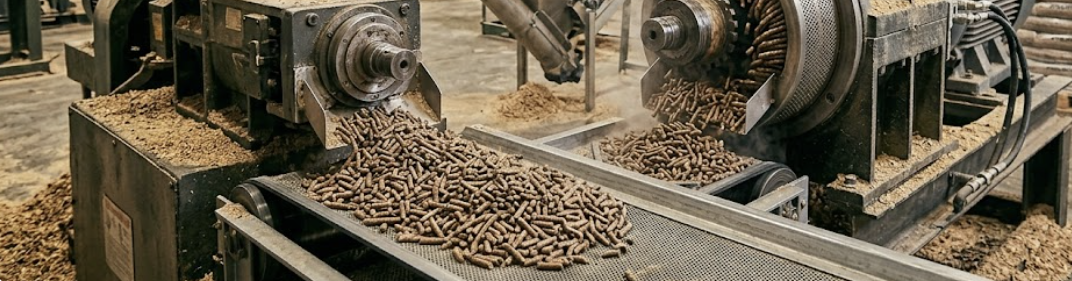
JINAN, SHANGDONG, CHINA, May 29, 2026 /EINPresswire.com/ — The global demand for sustainable energy resources and effective waste recycling has driven significant engineering advancements in biomass processing machinery. Central to this sector is the processing of forestry waste, agricultural residues, and construction timber into manageable, uniform wood chips and fibers. Achieving operational efficiency in these applications requires machinery that complies with international safety and quality standards while remaining flexible enough to handle unpredictable material characteristics. Through a comprehensive Custom Wood Crusher Service, manufacturers are progressively utilizing CE Quality Standards as a foundational benchmark to engineering high-performance systems capable of operating under rigorous industrial conditions worldwide.
Integrating standardized European safety and quality principles into raw industrial design guarantees that mechanical structures can withstand prolonged mechanical stresses. Beyond basic conformity, the contemporary industrial market demands a significant degree of customization. Industrial processing facilities rarely encounter uniform wood supplies; instead, they operate on raw logs, high-moisture bark, demolition waste embedded with metal fasteners, or fibrous bamboo. Managing these heterogeneous feedstocks requires a specialized technical framework capable of adapting processing parameters to the unique physical properties of each input material.
I. Operational Challenges in Diverse Feedstock Processing
In the biomass processing and recycling sectors, processing facilities routinely deal with varied feedstock conditions that degrade standard crushing machinery. High-moisture timber, often exceeding 50% water content by weight, creates severe processing difficulties. Wet wood fibers exhibit increased elasticity and a tendency to stick, which frequently plugs standard screening grates and causes mechanical drag, overheating, and increased energy consumption. Conversely, processing ultra-hard tropical hardwoods or dense roots accelerates mechanical wear on cutting components, requiring heavy-duty metallurgy and rigid mechanical designs to prevent structural fractures.
The processing environment is further complicated by contaminated feedstock, such as construction templates, pallets, and demolition timber. These materials are frequently embedded with iron nails, steel screws, concrete residues, and metal brackets. Standard high-speed hammer mills or chippers suffer catastrophic blade damage when encountering these uncrushable contaminants. Consequently, the industrial sector requires customized wood crushing solutions equipped with robust feeding mechanisms, adaptive speed controls, and heavy-duty tool geometries that can handle both the abrasive nature of contaminated wood waste and the physical resistance of raw, oversized timber.
II. Engineering Tailored Solutions for Challenging Materials
To manage these operational variables, BOLIDAMACHINERY designs customized industrial crushing configurations tailored to specific material types and processing conditions. For high-moisture materials, the crushing chamber can be configured with open-discharge structures or adjustable, non-clogging sieve plates to ensure wet fibers flow smoothly without packing. For dense or contaminated construction templates, systems integrate a heavy-duty hydraulic buffering system. This hydraulic mechanism dampens sudden mechanical impacts and allows the upper feeding rollers to lift automatically when non-crushable materials enter, preventing structural damage and reducing operational downtime.
Material feeding is controlled by a structured upper and lower feeding mechanism paired with an automated feeding chain plate. Constructed from high-strength Q345 steel plate, the chain plate conveyor resists deformation under heavy loads, providing steady material transport into the processing chamber. The combination of aggressive, spiked feeding rollers and a heavy-duty knife rotor ensures that long tree branches, irregular demolition boards, and round logs are held securely and drawn into the cutting zone at a controlled speed, eliminating material slippage and preventing material kickback for safer operation.
III. Technical Specifications and Structural Optimization
The structural layout of a comprehensive wood crusher consists of an integrated machine base, a heavy-duty knife rotor, upper and lower feeding mechanisms, automated feeding devices, and a hydraulic buffering system. The core of the crushing process relies on impact, shearing, and tearing forces. During operation, a high-power industrial motor drives the large-diameter rotor at high speed. As material enters the chamber, it is struck by high-speed hammer heads and sheared against fixed counter-blades, breaking down the structural integrity of the timber.
The choice of materials determines the durability of these internal components. The cutting blades are machined from H13 tool steel, an alloy known for maintaining high toughness and resisting thermal cracking during continuous high-temperature friction. The hammer heads are cast from high-manganese steel alloys—specifically Mn13 or Mn13Cr2. To extend service life under highly abrasive conditions, the striking surfaces of these hammers are overlaid with YG8 tungsten carbide particles via specialized hardfacing welding. This composite construction provides an exceptionally hard wear surface backed by a shock-absorbing, ductile steel core. Smaller particles pass through the lower sieve plate, while oversized pieces remain in the chamber for further reduction.
Industrial operations can select from multiple standard and modified configurations depending on their specific capacity requirements:
Model YMPJ1300-300: Designed for mid-sized operations, utilizing a 110 kW main motor accompanied by auxiliary feeding and hydraulic motors (4 + 5.5 + 3 + 1.5 kW). It features a 1300 by 300 mm feed port, delivers an output chip size of 30 to 110 mm, and achieves a throughput of 6 to 10 tons per hour with a total machine mass of 8.5 tons.
Model YMPJ1300-600: Features an expanded 1300 by 600 mm feed opening driven by a 160 kW main motor, delivering a production capacity of 12 to 15 tons per hour with an overall weight of 11.5 tons.
Model YMPJ1400: Equipped with a 220 kW main power unit, accommodating larger feed cross-sections up to 1400 by 600 mm, generating 15 to 20 tons per hour, and weighing 14 tons.
Model YMPJ1650: Designed for large-scale processing lines, combining a 220 kW main motor with up to 25.5 kW of auxiliary power, achieving capacities of 18 to 25 tons per hour with a 1650 by 600 mm intake.
Model YMPJ2113: A high-torque variant optimized for deep profiles, running a 315 kW motor with a 1100 by 530 mm port, processing 15 to 25 tons per hour.
Model YMPJ2116: The largest operational configuration, built for intensive industrial processing. Powered by a 450 kW main motor and dual 18.5 kW feeding drives, it features a 1250 by 700 mm intake, processing 40 to 60 tons per hour, with a total equipment weight of 45 tons.
IV. Quality Control and Manufacturing Infrastructure
Maintaining consistency across these heavy-duty machinery lines requires rigorous quality control and modern production facilities. Shandong Bolida Machinery Co., Ltd. operates an industrial infrastructure spanning more than 80,000 square meters, supported by a registered capital of 35 million RMB and a workforce exceeding 300 specialized technicians and research personnel. The manufacturing workflow is structured around ISO9001-2000 quality management principles, verifying every phase from raw steel procurement to final rotor balancing and load testing.
The equipment lines are fully certified under European CE and SGS standards, confirming that every customized configuration strictly adheres to the rigorous CE Quality Standards. This compliance guarantees that essential risk-mitigation engineering is fully integrated into the machinery, specifically covering mechanical structural guards to prevent operator contact with high-speed rotors, standardized electrical wiring that complies with low-voltage and electromagnetic compatibility directives, and reinforced hydraulic containment systems designed to prevent high-pressure fluid leaks. Furthermore, acoustic insulation and vibration-dampening designs are optimized to align with European industrial noise control thresholds. Adhering to these recognized CE Quality Standards provides a verified safety benchmark, facilitating seamless integration into strictly regulated industrial environments across Europe, North America, South America, Southeast Asia, and Africa. By combining scientific research with international trade frameworks, the enterprise maintains an integrated supply chain that supports long-term parts availability and technical field support across global markets.
Corporate Web URL: https://www.biopelletmachinery.com/
Shandong Bolida Machinery Co.,Ltd
Shandong Bolida Machinery Co.,Ltd
+ +86 155 0868 1778
info@bolidamachinery.com
Legal Disclaimer:
EIN Presswire provides this news content “as is” without warranty of any kind. We do not accept any responsibility or liability
for the accuracy, content, images, videos, licenses, completeness, legality, or reliability of the information contained in this
article. If you have any complaints or copyright issues related to this article, kindly contact the author above.

Media gallery