
Sapio Sciences, leaders in laboratory information management systems, says limitations in existing systems drive scientists to use unauthorised AI tools
LONDON, UK / ACCESS Newswire / June 23, 2026 / A survey commissioned by Sapio Sciences has highlighted that 77 percent of scientists report using unauthorised public AI tools as part of their lab work. Nearly 45 percent do so through personal accounts, meaning critical data is potentially made public and introduces a question over the validity of analysis and results.
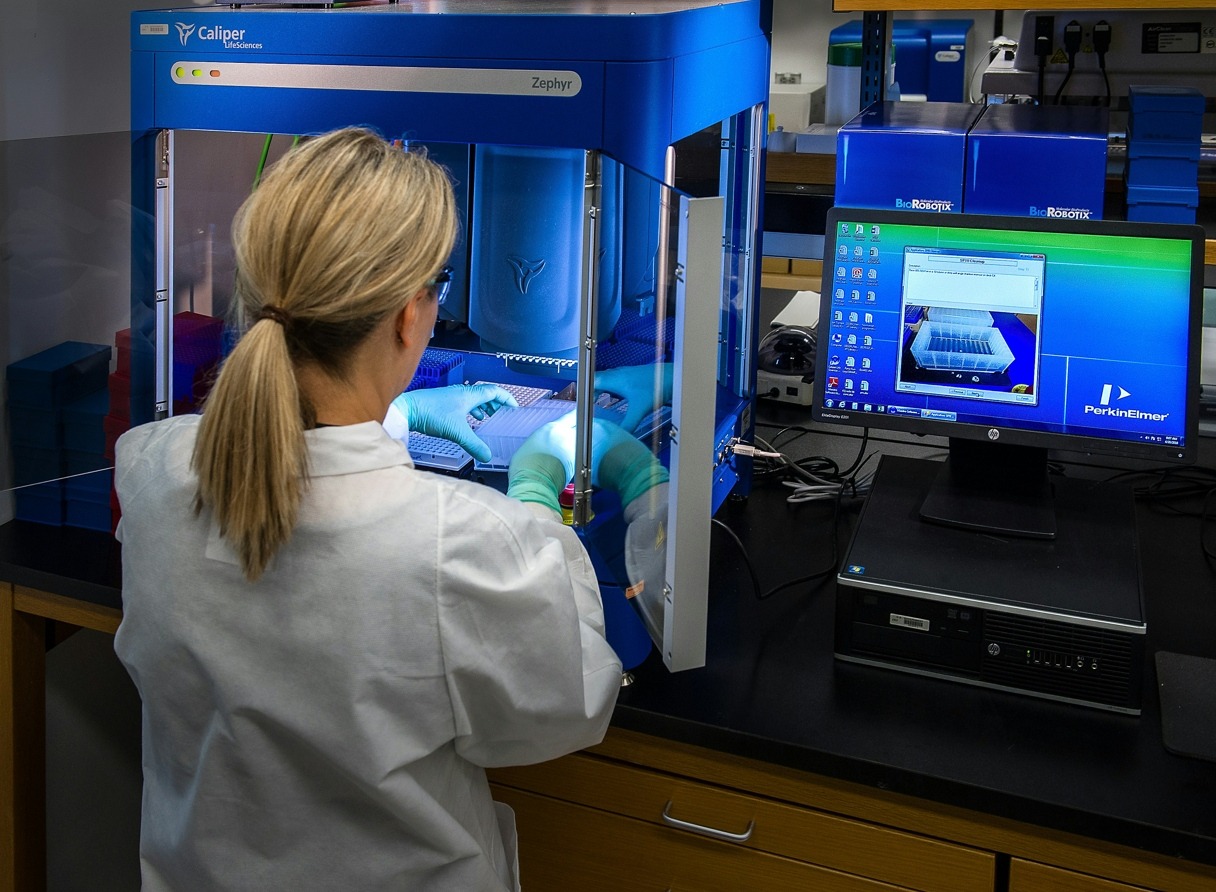
Image credit: Luke Chesser
Only 5 percent of scientists surveyed say they can analyse experimental results independently within official tools.
Shadow AI refers to the use of artificial intelligence (AI) tools or applications without approval from the company’s IT and security teams, but that use raises serious concerns around compliance, intellectual property and data leaks.
Sean Blake, Chief Information Officer at Sapio Sciences, said: “Shadow AI tends to emerge where official digital tools fail to support how modern science is practised.
“When platforms cannot support interpretation, comparison, or decision-making at the required pace, scientists work around them.”
According to experts at Sapio, shadow AI has become a defining feature of modern biopharma research and development. Scientists routinely use public AI tools to interpret results, refine protocols, and structure experimental thinking. Electronic lab notebooks (ELNs) and laboratory information management systems are already widely deployed.
Sean Blake added; “Many ELNs are optimised for documentation and retention rather than scientific reasoning. Interpretation and comparison frequently require informatics queues, manual exports, or external analysis.
“Scientific progress rarely stalls at data capture. It more often stalls during interpretation, when results must be translated into decisions. When official tools cannot support that transition efficiently, scientists adapt.”
The survey also highlights that 56 percent of scientists report their ELN slows them down, while 65 percent report repeating experiments because prior results are difficult to find, interpret, or reuse.
Public generative AI tools offer immediate, conversational assistance. They summarise results, structure thinking, and reduce cognitive overhead. In environments where official workflows depend on manual data manipulation, the appeal of public AI is obvious.
Sean Blake noted; “This usage reflects rational tradeoffs rather than defiance. From an infrastructure perspective, shadow AI reflects unmet demand within official systems.
“Typically, companies tend to respond by restricting the use of shadow AI. Blanket policies reduce exposure, but they rarely change behaviour.”
Industry experts, however, stress that the issue is not AI itself. Risk increases when AI operates outside the systems designed to manage scientific data and reasoning.
According to Sean Blake, the solution is to relocate governed, role-specific AI into where scientific work already occurs. Tools like the AI Lab Notebook, sometimes described as an AI-enabled ELN, are emerging that support this relocation. An AILN is not a notebook with a chatbot layered on top. It is a system of reasoning designed to support interpretation within the scientific workflow.
Scientists are not seeking autonomous systems to replace judgment. They are seeking tools that help them move faster without compromising.
Sean Blake concluded; “The challenge is designing infrastructure that supports both control and innovation. Focusing solely on restriction reduces confidence. Embedding intelligence within approved systems regains visibility.
“The choice is no longer whether AI belongs in the lab. It is whether intelligence remains outside official systems or is embedded where scientific decisions are actually made.”
For more information about Sapio Sciences, please visit https://www.sapiosciences.com/.
About Sapio Sciences
Sapio Sciences is a global software company transforming life sciences with its AI-driven lab informatics platform. By unifying data, workflows and scientific tools, it empowers researchers to accelerate discovery, streamline operations and drive innovation. Designed for scientists, Sapio simplifies complexity, enabling faster breakthroughs across research, diagnostics and biopharma development.
To find out more, https://www.sapiosciences.com/
MEDIA CONTACT
Contact Person Name – Andrew Peacock
Company Name – Sway PR
Email – andrew@swaypr.co
SOURCE: Sapio Sciences
View the original press release on ACCESS Newswire


