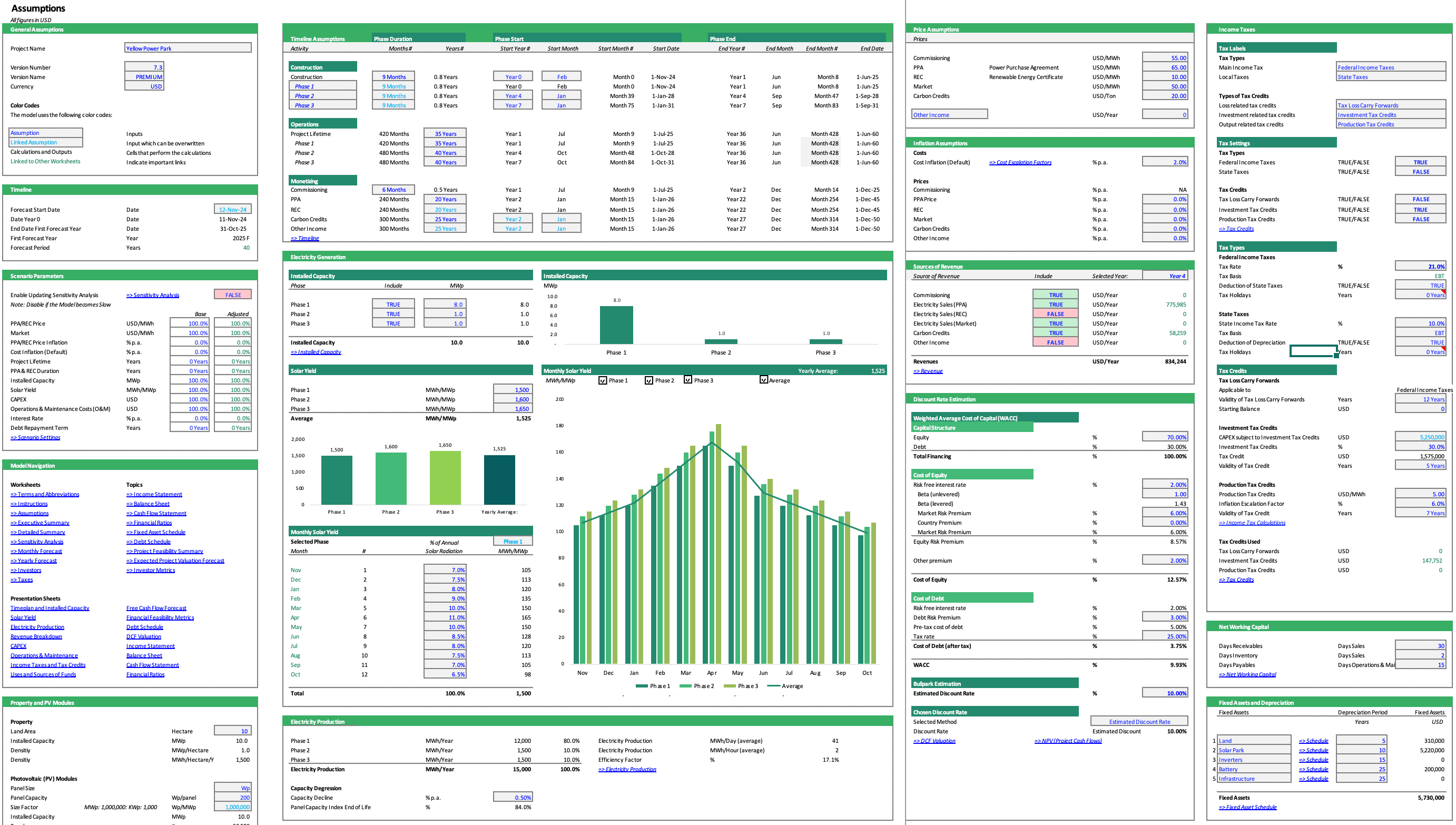
eFinancialModels’ Market Studies library turns market research into the sourced inputs that make 2026 financial models defensible.
ZURICH, SWITZERLAND, June 23, 2026 /EINPresswire.com/ — A financial model is only as reliable as the assumptions behind it, and in 2026 those assumptions are drawing more scrutiny than the formulas. eFinancialModels‘ Market Studies library is built to close that gap, pairing market data on size, growth, pricing, and cost with the sourced inputs a model needs, so a forecast rests on evidence rather than estimates.
Across sectors, the difference between a fundable plan and a rejected one often comes down to whether the inputs can be defended. Capital providers are asking sharper questions about where a forecast’s growth rate, addressable market, and unit economics come from. A model with traceable assumptions answers those questions before they are asked, which is what separates evidence-based financial models from spreadsheets built on guesswork.
According to eFinancialModels Research, the weakest part of most financial models is not the math but the assumptions feeding it. The studies are designed to give modelers a sourced starting point for the inputs that drive a forecast, the company notes, which is what makes the output something an investor or lender can act on. The library is organized by industry and market so a team can pull the relevant market evidence and connect it directly to their model.
WHAT THE MARKET STUDIES GIVE A MODEL
Across the markets covered, the studies provide the inputs that shape a forecast:
• Sourced market sizing: each study reports market size and forecast ranges with their sources, so a model’s addressable-market assumption can be traced rather than asserted.
• Demand and growth trajectories: the studies set out the drivers behind a market’s growth, giving revenue-ramp assumptions a defensible basis.
• Pricing and cost benchmarks: the studies compile pricing and cost references that modelers can use to sanity-check margin and unit-economics inputs.
• Cross-market comparison: organized by country and industry, the library lets teams compare where conditions favor a given business model before capital is committed.
• Scenario inputs: the studies surface the sensitivities that matter most in a sector, helping teams build upside and downside cases a board can interrogate.
Used alongside the platform’s financial model templates, the studies let a team move from market evidence to a working forecast without leaving the assumptions unexplained. Readers can find the full series in the market studies library.
Editor’s note: eFinancialModels’ Market Studies library spans a range of industries and markets across Asia, Europe, North America, Africa, and the Middle East, with each study pairing market data and sources with the assumptions used in financial modeling.
Communications Team eFinancialModels
eFinancialModels
info@efinancialmodels.com
Visit us on social media:
LinkedIn
Bluesky
Instagram
Facebook
YouTube
TikTok
X
Legal Disclaimer:
EIN Presswire provides this news content “as is” without warranty of any kind. We do not accept any responsibility or liability
for the accuracy, content, images, videos, licenses, completeness, legality, or reliability of the information contained in this
article. If you have any complaints or copyright issues related to this article, kindly contact the author above.

Media gallery