
Key Takeaways
- Minkyis softer than fleece – its ultra-fine microfiber pile gives it a velvety, plush feel that fleece cannot match for blanket use.
- Both fabrics are made primarily from polyester, but their construction differs in pile density, texture, and which side carries the soft finish.
- Fleece breathes better and costs less, making it a practical choice for activewear or budget projects – but minky wins for long-term softness due to its superior resistance to pilling, while both fabrics offer good general durability with proper care.
- Minky resists pilling far better than fleece, meaning it stays soft through many more washes.
- The right choice depends on the end use – but for the softest blanket possible, minky is hard to beat.
Choosing a fabric for a cozy blanket – whether sewing one from scratch or shopping for a ready-made version – almost always comes down to minky versus fleece. Both feel soft, both are made from polyester, and both show up in quilting shops and craft stores everywhere. They are not the same, though, and the differences matter a great deal once a blanket hits regular use.
Minky Wins on Softness – Here’s Why
Minky fabric is made from ultra-fine polyester microfibers that are densely knitted together and finished into a plush, velvety pile. That tightly packed pile is what makes minky feel so distinct the moment it is touched – smooth, silky, and almost cloud-like. Textile research on microfiber plush fabrics consistently shows higher tactile softness scores compared to standard polyester fleece, and consumer experiences back that up. One independent tester described a minky blanket as truly one of the softest things ever touched – and worth the splurge.
Minky was originally developed for baby blankets and plush toys because its texture is gentle enough for newborn skin. That origin says a lot about where it lands on the softness spectrum.
Same Base, Different Construction
At a glance, minky and fleece look like close cousins. Both are knit fabrics, both are synthetic, and both come in a wide range of colors and prints. The construction details, however, tell a more nuanced story.
Polyester Dominant, But Fleece Allows Blends
Minky is almost always 100% polyester – that consistency in fiber content is part of what keeps its texture so controlled and predictable. Fleece is also predominantly polyester but can be blended with other fibers, which affects how it feels, washes, and holds up over time. A cotton-poly fleece blend will behave differently than a pure polyester version. For blanket makers, this means reading the fabric label matters more with fleece than with minky.
Minky Is Mostly One-Sided; Fleece Is Typically Two-Sided
One of the most practical construction differences: minky is typically one-sided, with the plush pile on the top surface only and a smoother knit backing. Fleece is generally two-sided, carrying that soft texture on both faces. For blanket construction, this makes minky a natural pairing with a contrasting backing fabric – giving crafters more creative flexibility in how a finished piece looks and feels.
Softness and Texture: No Contest
Minky’s Microfiber Pile vs. Fleece’s Coarser Hand
Even a basic solid minky fabric is noticeably softer to the touch than fleece. Fleece has a slightly coarser hand – not rough by any means, but not silky either. Minky’s microfiber pile creates that velvet-meets-faux-fur sensation so associated with premium baby products and luxury throw blankets. Textile performance studies support this: microfiber plush fabrics like minky consistently rank higher in tactile softness and sensory comfort than polyester fleece.
For sensory-sensitive users – babies, young children, or adults who are particular about how fabrics feel against skin – that difference is significant. Minky’s feel has been compared to velvet and faux fur, and it delivers that kind of comfort without any break-in period.
Embossed Textures Only Minky Offers
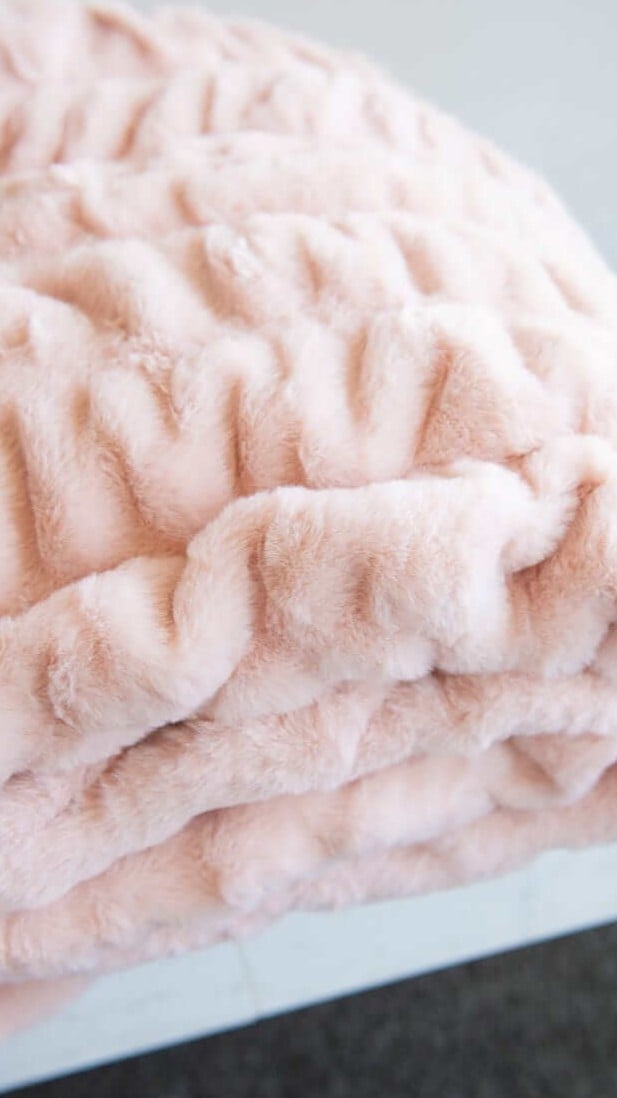
Beyond the basic pile, minky opens up a texture category that fleece does not have: embossed designs. Patterns like roses, waves, and geometric shapes are heat-set directly into the fabric during manufacturing. The result is a surface that is visually interesting and adds a more complex tactile feel. Fleece does not offer this – its texture is uniform across the surface. For crafters who want a blanket with both softness and visual depth, minky’s embossed options are a clear advantage.
Warmth and Breathability: Depends on Use
Minky Runs Warmer Due to Its Dense Pile
The same density that makes minky so soft also traps heat effectively. For a blanket meant to be used on the couch or in bed, that warmth is usually a feature. In warmer climates or for all-season use, though, some users find minky’s heat retention to be too much. A toddler’s nap blanket and a summer throw have very different warmth requirements, so the end use is worth keeping in mind.
Fleece Breathes Better for Activewear and Layering
Fleece was originally engineered as a lighter, more breathable alternative to wool. It stays warm even when wet and allows for better airflow than minky’s denser pile. This makes fleece a better fit for jackets, athletic gear, and layering pieces where breathability matters. For a blanket that sits on a bed or a couch, the breathability advantage of fleece is less compelling than minky’s superior softness.
Durability and Pilling Over Time
Minky Resists Pilling, With Caveats
One of minky’s strongest long-term advantages is its resistance to pilling. The tightly packed microfiber pile does not break down and form surface fuzz the way fleece can. Consumer reviews consistently note that minky blankets retain their softness and texture after many washes – which matters a lot for something used and laundered as frequently as a blanket. That said, overdrying minky in a hot dryer can damage embossed textures, so following care instructions carefully is important.
Fleece Pills More, but Anti-Pill Options Exist
Fleece is more prone to pilling, especially with heavy use or lower-quality fabric. Pilling happens when fibers break, tangle, and clump on the surface – making the fabric look worn and feel less soft over time. Anti-pill fleece is widely available and performs noticeably better than standard options. For budget-conscious projects where longevity is still a priority, anti-pill fleece is the smarter pick.
Care Instructions for Both
Both fabrics are straightforward to care for. General guidance for minky and fleece:
- Machine wash on a gentle cycle with cool water
- Use a laundry detergent without bleach
- Tumble dry on low heat for about 10 minutes, then hang dry the rest of the way
- Do not overdry – overdrying fleece accelerates pilling, and overdrying minky can distort embossed textures
Neither fabric shrinks or fades with proper washing, and both hold up well through regular laundering – a real practical advantage for blankets used daily.
Cost: Fleece Is Cheaper, But Not Always
Price is where fleece holds a clear edge at the entry level. Basic polyester fleece can be found for as little as $5 per yard at retail, while entry-level minky fabric typically starts around $10 per yard and climbs depending on quality and texture. High-end fleece options can reach $25 per yard, which narrows the gap considerably. The cost difference is real, but smaller than many shoppers expect. When durability and long-term softness are factored in, the value case for minky becomes much stronger.
For the Softest Blanket, Minky Is Worth It
Fleece is a solid, practical fabric – affordable, breathable, and versatile. It earns its place in outdoor gear, budget blanket projects, and activewear. For a blanket where softness, texture, and long-term feel are the priority, minky is the stronger choice on almost every front. Straight out of the wash, minky is softer, resists pilling, holds its texture longer, and offers embossed options with a sensory quality that fleece does not replicate.
The one real tradeoff is price – but paying a little more upfront for quality minky tends to result in a blanket that stays beautiful and soft far longer than its fleece counterpart. For crafters and consumers who want a blanket that feels as good on wash 50 as it did on day one, minky is the clear winner.
Minky Couture
475 Depot Drive
Ogden
UT
84404
United States


