JINAN, SHANDONG, CHINA, September 2, 2026 /EINPresswire.com/ — In any metal fabrication shop, the moment before welding or coating is often the moment that matters most. Rust, oxide scale, old paint—if the surface is not properly prepared, downstream quality suffers. For decades, workshops have relied on sandblasting cabinets, chemical pickling baths, and wire-brush grinders to get the job done. These methods work, but they also generate abrasive waste, chemical effluent, and varying degrees of damage to the base material. As environmental regulations tighten and manufacturers look for more controllable processes, laser cleaning has emerged as a practical alternative that eliminates both abrasive media and chemical solvents from the surface-preparation step.
TOPTEK LASER, a Global-Service Supplier of Laser Cleaning Machine headquartered in Jinan, Shandong Province—China’s largest laser manufacturing hub—has been developing and exporting laser systems for more than ten years. The company currently serves customers across over 80 countries and regions, supported by overseas service centers in South Korea, Turkey, and Europe. Drawing on its engineering experience with both pulsed and continuous-wave laser cleaning platforms, TOPTEK offers the following comparison between laser-based and traditional surface-preparation methods to help end users evaluate the technology on practical terms.
Environmental Impact and Waste generation
Sandblasting and chemical cleaning: the residual cost
Sandblasting requires consumable media—quartz sand, steel shot, or aluminum oxide grit. Each blasting cycle produces airborne particulate that must be contained inside a dedicated dust-collection room, and the spent media itself becomes solid waste requiring disposal. Chemical pickling, meanwhile, involves acid or alkaline solutions that must be neutralized and treated before discharge. Both processes carry ongoing costs for consumables, waste handling, and regulatory compliance.
Laser cleaning: a solvent-free, abrasive-free workflow
A laser cleaning machine removes contaminants by directing pulsed or continuous laser energy at the target surface. The rust, paint, or oxide layer absorbs the energy and is vaporized or spalled away, while the underlying metal—having a higher ablation threshold—remains largely unaffected. The small volume of particulate released during the process is captured by a local fume-extraction hood rather than a full-scale dust-collection facility. No chemical solutions are involved at any stage. This characteristic aligns well with the environmental intent behind frameworks such as EU RoHS and REACH, which aim to reduce hazardous substances in industrial processes. TOPTEK’s product literature describes its laser cleaning systems as an eco-friendly solution, and the absence of consumable media supports that description in a straightforward way.
Substrate Integrity and Selective Removal
Mechanical and chemical risks to the base material
Wire brushes and grinding wheels physically abrade the workpiece surface. Over repeated cleaning cycles, this can thin the parent material—a particular concern for precision molds and thin-walled components. Strong acid pickling introduces another risk: hydrogen embrittlement, where atomic hydrogen diffuses into the metal lattice and degrades its mechanical properties. Neither method offers fine control over how much material is removed.
Pulsed laser parameters for controlled depth
TOPTEK’s product range includes pulsed laser cleaning models at 100 W, 200 W ,300 W, 500 W , 1000W, 2000W output levels. Pulsed operation allows the operator to adjust pulse width and repetition frequency, which together determine the energy delivered per unit area and, consequently, the depth of material removal. In practice, this means an operator can strip a layer of paint or rust while leaving the metal substrate with its original surface reflectivity intact. The process is selective by nature: because different materials have different absorption characteristics at the laser wavelength, the cleaning action preferentially targets the contaminant layer and slows markedly once it reaches clean metal. This level of control is difficult to replicate with any abrasive or chemical method.
Portability and On-site Accessibility
The fixed-facility limitation of traditional methods
Conventional sandblasting typically requires a fixed blasting room or at minimum a portable blasting pot with a compressor, hoses, and protective enclosures. When a large structural component or an installed mold needs cleaning, the part must either be disassembled and transported to the blasting facility or the blasting equipment must be rigged on-site—both options adding time and cost.
Handheld laser cleaning for field applications
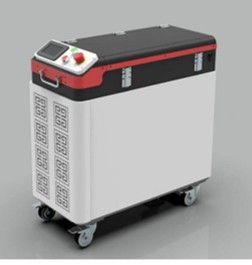
TOPTEK’s handheld laser cleaner packages the laser source, cooling system, and control electronics into a portable enclosure paired with a fiber-delivered cleaning gun. This configuration allows technicians to bring the tool directly to the workpiece. Typical field applications, as documented in TOPTEK’s project portfolio, include mold cleaning, weld seam pre-treatment, and oxide removal on structural steel prior to coating. The fiber delivery cable provides several meters of reach, making it feasible to clean surfaces in confined or elevated positions without relocating the part.
Product Quality And Engineering-Led Service From A Laser Cleaning Machine Supplier
The performance of any laser cleaning system depends heavily on the quality of its core components. TOPTEK sources its laser sources and scanning heads from internationally recognized premium brands, a sourcing policy detailed on the company’s website. Each unit undergoes power-stability and beam-quality testing before shipment, following an assembly and inspection process that reflects the company’s alignment with European and North American design standards.
Beyond hardware, TOPTEK’s service model is built around technical accessibility. Every sales representative has an engineering background, which means parameter recommendations—such as selecting the right pulse frequency for a specific coating type—come from practical production knowledge rather than generic sales scripts. The overseas service centers in South Korea, Turkey, and Europe provide on-site installation, operator training, and spare-parts logistics, reducing the response time that international customers typically face when sourcing equipment from China. With more than 10,000 laser systems operating worldwide, the company’s after-sales data also feeds back into product refinement, contributing to the long-term reliability that TOPTEK emphasizes as a core commitment rather than a marketing tagline.
Choosing The Right Approach For Your Application
The comparison between laser cleaning and traditional methods comes down to three practical advantages: no abrasive media and no chemical effluent, controllable removal depth that preserves the base material, and handheld portability that brings the process to the workpiece rather than the other way around. These are not theoretical benefits—they translate directly into lower consumable costs, reduced environmental liability, and greater flexibility on the production floor or in the field.
TOPTEK LASER, as a laser cleaning machine supplier with global service infrastructure, provides both the equipment and the application expertise to help manufacturers evaluate whether laser cleaning fits their specific workflow. For those interested in testing the process on their own materials, sample cleaning trials and parameter consultations are available through the company’s engineering team.
To learn more or request a consultation, visit: https://www.topteklasercnc.com
SHANDONG TOPTEK IMPORT & EXPORT CO., LTD.
TOPTEK LASER
email us here
Visit us on social media:
LinkedIn
Facebook
YouTube
Legal Disclaimer:
EIN Presswire provides this news content “as is” without warranty of any kind. We do not accept any responsibility or liability
for the accuracy, content, images, videos, licenses, completeness, legality, or reliability of the information contained in this
article. If you have any complaints or copyright issues related to this article, kindly contact the author above.

Media gallery