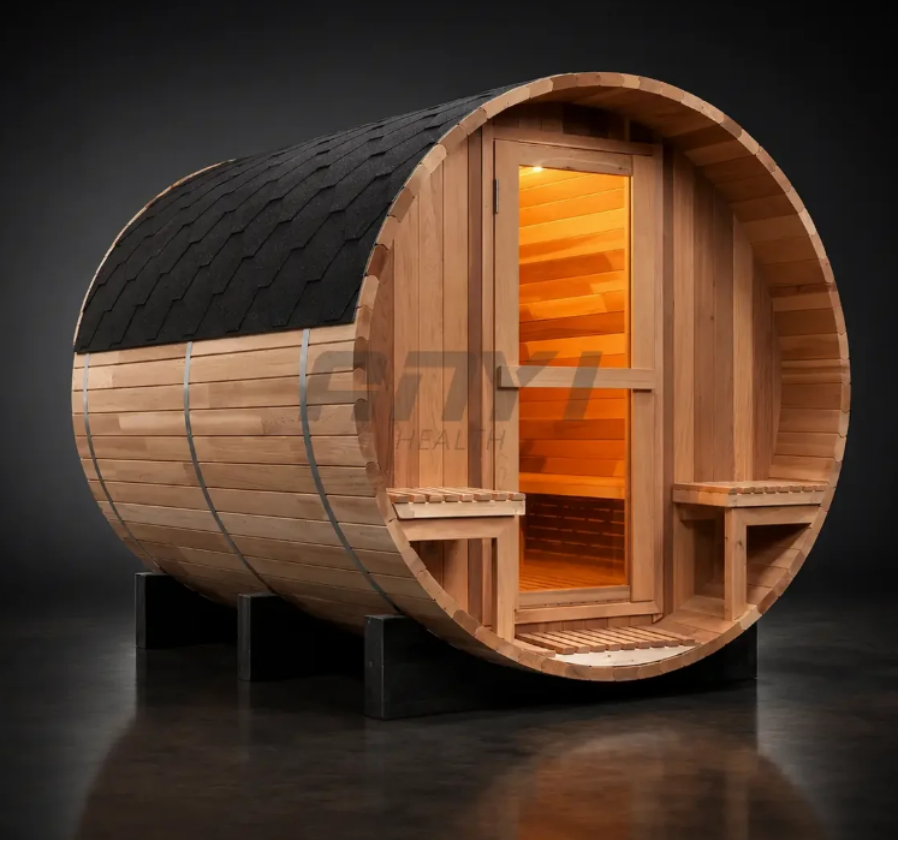
JERSEY, NJ, UNITED STATES, September 2, 2026 /EINPresswire.com/ — Homeowners systematically evaluate structural contours and timber engineering when integrating a thermal retreat into their private landscaping scheme. Selecting an appropriate outdoor sauna design requires an understanding of how distinct cabin geometries govern internal heat convective currents, long-term wood movement, and spatial footings within residential backyards. When assessing a barrel sauna vs square sauna, property planners balance the thermodynamic efficiency of circular profiles against the modern layout advantages of standard rectangular structures. Operating as a direct manufacturer of high-grade Canadian red cedar and thermowood cabins, Anyisauna produces both engineered geometries to match varying residential architectural demands.
Architectural Form and Interior Spatial Dynamics
The structural geometry of an outdoor sauna dictates how air circulates within the thermal chamber. A barrel sauna relies on a circular wall system where curved timber staves form a natural self-supporting arch structure. This round profile creates a continuous thermal convection loop, encouraging rising hot air to flow smoothly along the curved walls rather than collecting in upper corners. Because there are no dead air pockets near ceiling intersections, heating efficiency improves and warm air distributes evenly across the seating area. The exterior footprint remains compact along the base, making circular models an ideal focal point for round patio installations or natural garden environments.
Square and rectangular sauna cabins utilize perpendicular wall joins, flat or single-pitched ceilings, and full vertical side walls. Models like the Anyi-5 and Anyi-7 square units maximize usable interior room by allowing straight, multi-tiered benching arrangements. Benches can be mounted parallel or in an L-shaped configuration, facilitating face-to-face seating for four to eight occupants. The straight exterior edges allow these cabins to fit neatly against property fence lines, exterior stone walls, or beside swimming pool equipment pads, optimizing backyard floor space along linear boundaries.
Timber Selection and Structural Engineering
Material selection plays a critical role in preventing timber warp caused by rapid temperature fluctuations and seasonal weather exposure. Barrel saunas commonly utilize milled staves made from Canadian red cedar, white pine, or hemlock, cut with precise tongue-and-groove profile edges. These staves measure between 16mm and 19mm in thickness, giving the circular assembly enough flexibility to expand and contract during high-humidity steam sessions without compromising structural integrity. Stainless steel exterior compression bands wrap around the perimeter, maintaining tight staved joins across changing ambient weather conditions.
Square sauna structures prioritize wall mass and heavy timber framing to maintain rigorous thermal retention. High-density Canadian red cedar and thermally modified carbonized spruce wood serve as the core materials for these square models. The carbonization process bakes the wood at elevated temperatures, reducing moisture absorption and enhancing dimensional stability against outdoor humidity. Square designs frequently incorporate full-height front glass panels made from 8mm tempered or tinted safety glass. Anyisauna engineers these solid wall panels to form tight corner joints, creating controlled insulation barriers that accommodate heavy electric or wood-burning heaters.
Heating Efficiency and Ventilation Mechanics
Thermodynamic patterns differ significantly between round and box-shaped sauna interiors. In a barrel sauna, heat generated by an electric stove or traditional rock heater rises directly toward the curved roof, slides down the opposite wall, and returns to the heater level. This continuous circular airflow reduces warm-up times and helps maintain balanced humidity levels during water-ladle steam applications. Exhaust vents mounted near the upper wall staves allow moist air to exit cleanly, preventing condensation buildup along the interior timber ceiling.
Square saunas feature vertical walls that create distinct thermal zones inside the cabin. Hot air rises naturally toward the flat ceiling, forming an upper heat layer while lower bench areas remain slightly cooler. This temperature stratification suits users who prefer varying heat intensities within the same session. Ventilation systems in square units often leverage operable front glass panels or adjustable wall vents to regulate fresh air intake. The structured ceiling layout in models like the Anyi-5 accommodates larger heating elements, ensuring consistent steam generation throughout expanded interior volumes.
Capacity and Backyard Placement Integration
Choosing between a barrel sauna vs square sauna often depends on household size and landscape design preferences. Barrel saunas typically range in size to accommodate two to six individuals, with unit lengths starting near 4.9 feet for compact yards and extending to larger models equipped with built-in front porch seating. The circular aesthetic works exceptionally well when installed as a standalone landscape element surrounded by softscape gardening, flagstone paths, or open lawn areas.
Square saunas provide expanded capacity options ranging from four to eight people, making them suitable for larger family gatherings or social entertaining. The rectangular profile aligns with modern home architecture, paved patios, and concrete poolside decks. An Anyisauna square unit can be positioned flush against yard corners or aligned parallel to outdoor kitchens, keeping main walkway corridors open. Integrated features like private changing rooms and covered front terraces further enhance the functionality of square cabin layouts.
Choosing the Ideal Design for the Outdoor Space
Deciding on the correct outdoor sauna design requires balancing visual styling, spatial footprints, and long-term utility requirements. A barrel sauna offers classic circular geometry with rapid thermal circulation, while a square sauna provides spacious interior benching and seamless alignment with residential construction lines. As a direct-to-consumer manufacturer with over ten years of woodcraft experience, Anyisauna builds both sauna configurations using slow-grown certified cedar and carbonized spruce timber.
With regional distribution centers located in New Jersey and California, Anyisauna provides free curbside freight delivery across the contiguous United States. Every sauna kit features pre-cut tongue-and-groove wooden components designed for straightforward assembly, backed by comprehensive factory-direct customer service and solid warranty coverage. Homeowners exploring thermal wellness solutions can request layout diagrams, wood sample kits, and direct factory pricing by visiting https://www.anyisauna.com/
Anyisauna
Anyisauna
+86 162 6420 7754
email us here
Visit us on social media:
Instagram
Facebook
YouTube
Legal Disclaimer:
EIN Presswire provides this news content “as is” without warranty of any kind. We do not accept any responsibility or liability
for the accuracy, content, images, videos, licenses, completeness, legality, or reliability of the information contained in this
article. If you have any complaints or copyright issues related to this article, kindly contact the author above.

Media gallery