
Little Rock, AR – November 04, 2026 – PRESSADVANTAGE –
Bale Collision Center’s Chenal location is sharing guidance on managing auto glass parts, inventory, and supplier relationships to explain how replacement glass availability and parts coordination can influence vehicle repair planning. The November guidance focuses on identifying the correct glass, confirming supplier availability, coordinating delivery, and accounting for installation and vehicle safety system requirements.
Auto glass replacement involves more than obtaining a windshield or window that appears to fit a particular vehicle. Modern vehicles can have different glass specifications depending on their model year, equipment, and installed technology. These differences can affect parts selection, ordering, and the work required after installation.
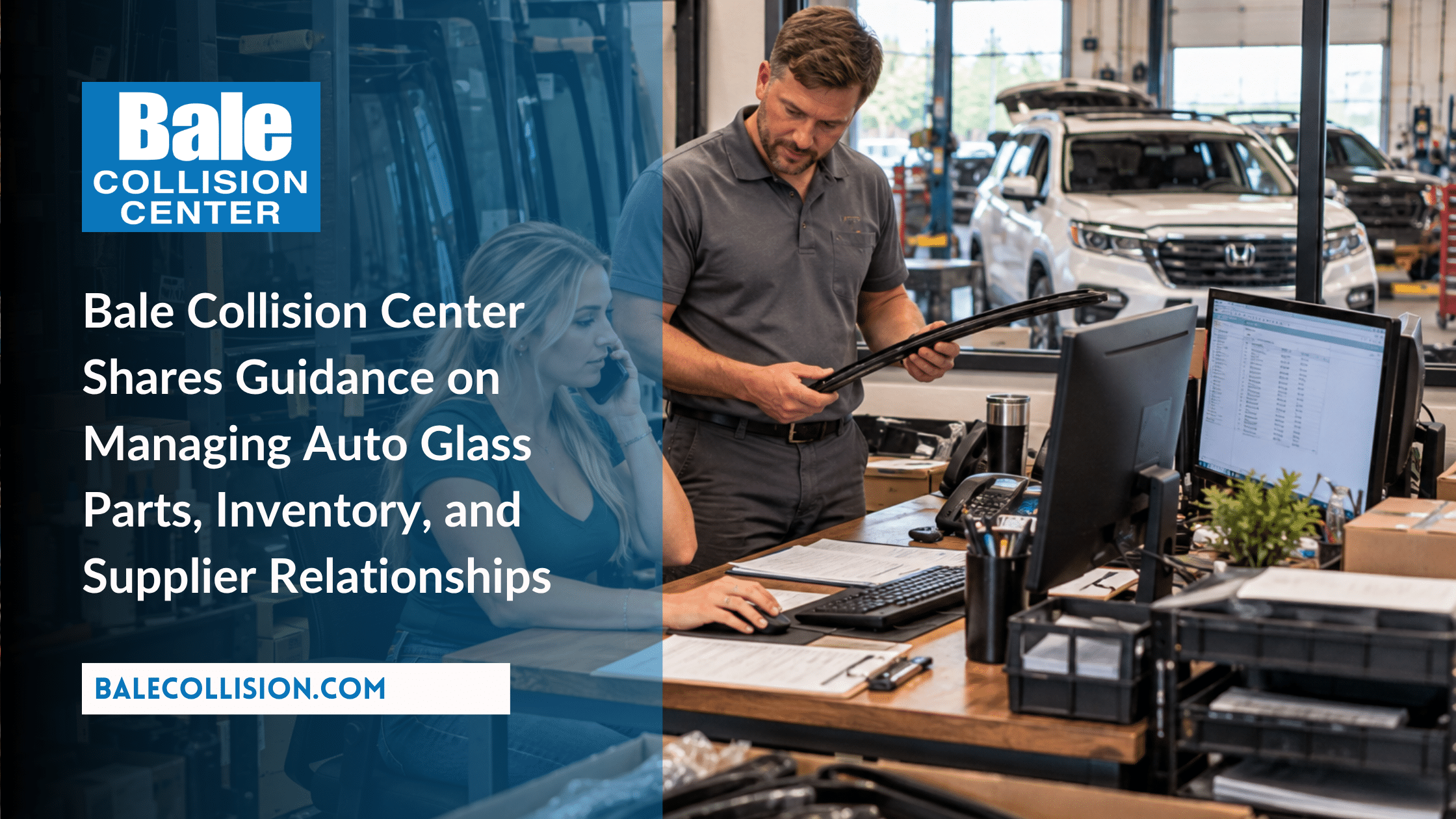
Bale Collision Center provides auto glass replacement services for windshields, side windows, and rear glass. The new guidance explains how parts planning can support the replacement process at its Chenal location.
One of the first considerations is accurate parts identification. A vehicle’s make, model, and year provide a starting point, but additional equipment information may be necessary to determine the appropriate replacement glass.
For example, certain windshields accommodate forward-facing cameras, rain sensors, heating elements, or other equipment. Glass with different specifications may not be interchangeable even when the exterior dimensions appear similar.
Confirming the correct part before ordering can help reduce avoidable delays associated with receiving incompatible glass. Technicians and parts coordinators may need to review vehicle identification information, available parts documentation, and applicable manufacturer requirements.
Inventory availability represents another important consideration. Some replacement glass may be available through nearby suppliers, while other components may require additional ordering or delivery time.
The November guidance distinguishes between confirming that a part is listed in a supplier catalog and verifying that it is actually available for the planned repair. Availability can change, and an order may require additional confirmation before a repair schedule can be finalized.
Supplier relationships can also influence how efficiently information is exchanged. Accurate part descriptions, order confirmations, delivery updates, and procedures for addressing damaged or incorrect shipments help repair facilities coordinate work with their glass suppliers.
These considerations do not eliminate supply delays, but they can help repair planners identify potential problems before the vehicle reaches the installation stage.
The guidance also addresses inventory management within a repair operation. Maintaining accurate records of ordered, received, and allocated glass components can help prevent parts intended for one vehicle from being confused with those required for another.
Inspection upon delivery is another important step. Replacement glass should be checked for shipping damage, correct specifications, and the presence of required features before installation begins.
When glass replacement is associated with a larger accident repair, timing may depend on other repair operations. Through its collision repair services, Bale Collision Center addresses vehicle repairs that can involve multiple components and stages of work.
A windshield may need to be installed at a particular point in the repair sequence, depending on the vehicle and the work being performed. Related body repairs, adhesive curing requirements, and applicable manufacturer procedures can affect when subsequent operations may proceed.
Advanced Driver Assistance Systems create an additional planning consideration. Vehicles equipped with windshield-mounted cameras may require specific procedures after windshield replacement, including calibration when directed by the manufacturer.
Bale Collision Center provides ADAS calibration services for applicable vehicle systems. The guidance explains that ordering the correct glass and determining calibration requirements are related planning considerations, but they are not the same operation.
For drivers visiting the Chenal location in Little Rock, the central takeaway is that auto glass replacement timelines can depend on more than the installation itself. Correct parts identification, supplier confirmation, inventory tracking, delivery inspection, and coordination with related repair procedures all contribute to an organized repair plan.
The November guidance encourages vehicle owners to ask whether the correct glass has been identified, whether the replacement part is available, and whether any additional vehicle-specific procedures may affect the expected completion date.
Bale Collision Center provides auto glass replacement, collision repair, auto body repair, and related vehicle repair services at its Chenal location, 13101 Chenal Pkwy, Little Rock, AR 72211.
###
For more information about Bale Collision Center, contact the company here:
Bale Collision Center (Chenal)
Jason Spiller
(501) 221-7181
jspiller@baleautomotive.com
13101 Chenal Pkwy, Little Rock, AR 72211, United States


