
Originally Posted On: https://ikippahs.com/blogs/jewish-style/how-to-clean-a-leather-kippah-after-rain-or-a-sweaty-summer-day
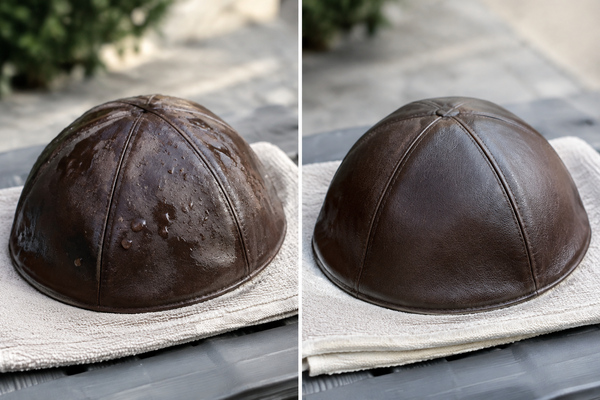
What You'll Need
Nothing fancy here. Most of this is already in your kitchen or linen closet. Gather it all first so the leather isn't sitting damp while you hunt for a cloth.
Tools and Materials
-
Two soft, lint-free cloths. One for blotting, one for wiping. Microfiber or an old cotton T-shirt works.
-
Paper towels. Plain white only, so no dye or print transfers to the leather.
-
Mild soap. A drop of unscented hand soap or baby shampoo. Skip anything with bleach or strong fragrance.
-
Leather conditioner. A light, cream-based one made for smooth leather.
-
A small bowl or rounded form. An upside-down cereal bowl or a soft ball holds the kippah's dome while it dries.
-
A cup of lukewarm water. Never hot.
Before You Start
-
Know your leather. This guide is for smooth leather. If your kippah is suede or has a velvet trim, the soap-and-water step doesn't apply, and you should only blot and brush it gently.
-
Check the inside edge. You'll need a small hidden spot for a patch test.
-
Clear a dry spot. Pick a shelf or counter away from radiators, sunny windows, and hair dryers.
Skills and Time
-
Skill level: beginner. If you can wipe a table, you can do this.
-
Hands-on time: about 15 minutes.
-
Drying time: 12 to 24 hours, so start the evening before you need it.
-
Conditioning: add 10 minutes once it's fully dry.
One surprise downpour on the walk to shul can leave a Leather kippah spotted, stiff — smelling like a wet wallet. A hot July commute does the same thing from the inside out. Sweat, salt, humidity, and a bus ride later, the rim looks tired.
Here's the thing: leather is tougher than most guys give it credit for. It's also less forgiving than cotton or linen, because the wrong move (a hairdryer, a hard scrub) can crack it for good. Most damage doesn't come from the weather. It comes from what happens in the next hour.
Fix it right, and a good leather piece looks sharp at the office and in the sanctuary for years. Skip the right steps, and you're shopping for a replacement by Sukkot. So what should you do first, before the water sets?
What You'll Fix and What You Need Before You Start a Leather Kippah Cleanup
A man steps out of shul into a sudden downpour, and by the time he reaches his car, his kippah is soaked. Two weeks later, a humid August commute leaves it stiff and salt-streaked. Same problem, different cause. Water spots, sweat residue, and a warped shape are what you're fixing here.
Before touching it, know what you're holding. A true Leather kippah is the easiest to clean, but not every dark, dressy piece is smooth leather. A Formal Yarmulke might be velvet, suede, or leather with a trim, and each reacts differently to water.
Materials checklist
-
Soft cloth (microfiber works best)
-
Leather conditioner
-
Mild soap, a few drops only
-
Paper towels for blotting and stuffing
-
A bowl or rounded form to hold the shape while it dries
How to tell smooth leather from suede or velvet-trimmed styles
Run a fingertip across the surface. Smooth leather feels slick and cool, with a slight sheen. Suede feels fuzzy and shows a darker streak when you brush it. Velvet trim has a soft pile around the rim, even when the crown is leather. If you spot fuzz anywhere, skip the soap and water. That's a different cleanup entirely.
Step 1: Blot Rain or Sweat Off Your Leather Kippah Right Away
Don't rub it. Blot it. A wet leather kippah needs a light touch in the first few minutes, and that's the whole job.
Why rubbing makes water spots worse
Rubbing drags moisture and surface dye sideways across the hide. The result is a wider, darker ring that dries into a stain. Blotting lifts the water straight up and keeps it from spreading.
-
Take the kippah off your head and shake off loose drops.
-
Press a clean, dry microfiber cloth or white cotton towel flat against the wet area. Hold for five seconds.
-
Lift, move to a dry patch of cloth, and press again until no moisture transfers.
-
Stuff the crown lightly with a clean cloth so it keeps its shape.
-
Let it air-dry at room temperature, away from radiators and hair dryers.
Sweat works the same way. Salt from a long summer day leaves pale marks if it sits, so blot early. A Jersey kippah in a soft knit backing handles moisture a bit differently, but the press-and-lift method still applies to the leather panels and rim.
Planning a few spares for rainy weeks?
A custom kippah order in leather, suede, or velvet gives you a rotation, so one pair can dry fully while another stays on duty.
Step 2: Shape the Kippah and Air Dry It Away From Heat
Where should a damp leather kippah actually go to dry? Not on a radiator, not in front of a hairdryer — never in direct sun. Heat is what cracks leather, and a cracked kippah can't be fixed.
Start by blotting the surface with a dry towel. Press, don't rub. Rubbing drags moisture deeper and can scuff the finish.
-
Reshape it. Set the kippah over a small bowl, a rolled towel, or a fist-sized ball so the dome holds its curve.
-
Stuff lightly. Tuck a few sheets of plain white paper under the rim to soak up sweat from the inside. Swap them out once they feel damp.
-
Pick a spot. Choose a cool, shaded room with moving air. A shelf near an open window works well.
-
Wait. Plan on 12 to 24 hours. Rushing it is the one mistake that does lasting damage.
Fabric styles behave differently, and that's worth knowing. A Cotton kippah can handle a quicker dry and a gentle press, while leather needs patience and no iron at all. A Brown kippah in wool should also dry flat and away from heat, much like its leather cousins.
Once the surface feels dry to the touch, leave it another hour. Then move on.
Step 3: Wipe Away Sweat, Salt and Grime With a Damp Cloth and Mild Soap
Sweat is roughly 99% water, but the remaining 1% is salt, and that salt is what leaves white tide lines on a leather kippah after a hot day. Rain brings its own trouble: dirt carried in the water dries into dull patches. Either way, a gentle wipe fixes it.
Spot-test on the inside edge first
Before touching the visible surface, test the cleaning mix on the inside edge, where any change in color stays hidden. Skip this and a dark navy or camel finish could blotch. Here's the routine:
-
Mix one drop of mild, fragrance-free soap into a small bowl of lukewarm water.
-
Wring a soft microfiber cloth until it's barely damp. Dripping is too wet.
-
Dab the inside edge and wait two minutes.
-
If the color holds and the leather stays smooth, wipe the outer surface in light, circular strokes.
-
Follow with a second cloth dampened with plain water to lift soap residue.
Never scrub. Never soak. Pat dry with a towel and let it air out away from heaters or direct sun.
This method suits smooth finishes. A custom Suede kippah needs a dry suede brush instead of water, so keep the two materials separate in your cleaning kit.
Step 4: Condition the Leather and Check the Fit, Lining, and Rim
Conditioning a leather kippah doesn't mean slathering it in oil. That's the myth, and it ruins more kippahs than rain ever did. Heavy oils darken the leather, stain the lining, and leave a greasy ring on the forehead. Less is better. Always.
Once the kippah is fully dry (give it a full day, away from heaters), work through this routine:
-
Condition lightly. Rub a pea-sized dab of leather conditioner onto a soft cloth, then wipe the outside in small circles. Buff off the excess after five minutes.
-
Check the lining. Press a finger inside. Any dampness, odor, or stiffness means it needs more air time.
-
Inspect the rim. Look for lifted stitching or curling edges, especially where sweat collects.
-
Test the fit. A kippah that shrank slightly should sit flat without pinching. Don't force it onto your head to stretch it.
Suede behaves differently from smooth leather, so skip the conditioner on a suede kippah — use a soft brush instead. A velvet or linen lining dries faster than the shell, so check it twice.
Worn daily at the office and in shul, a structured Conservative kippah in leather holds its shape for years with this routine (maybe five minutes a month).
Troubleshooting: Common Mistakes That Ruin a Leather Kippah and How to Verify It's Clean
A man pulls his leather kippah off the radiator after a rainy commute. It's curled at the edge, hard as cardboard, with a pale ring near the rim. He scrubbed it with a soapy rag the night before. That's the mistake.
Fixing stiffness, water stains, and lingering odor
-
Stiffness: Heat caused it. Rub a pea-sized dab of leather conditioner in with a soft cloth, then let the kippah rest flat overnight.
-
Water stains: Dampen the whole panel evenly with a barely wet cloth so the ring blends in. Dry it away from the sun.
-
Odor: Stuff it with a dry cloth and a spoonful of baking soda in a small cotton pouch. Leave it 24 hours.
Never soak it. Never use a hair dryer. Those two habits kill more leather than any rainstorm.
Quick checks that confirm it's ready for the office or shul, plus daily care habits and when a different material like linen or cotton makes more sense for hot weather
-
Press it. The leather should flex, not crackle.
-
Smell the inner lining. Neutral means done.
-
Run a thumb over the surface. No tackiness, no dark patches.
Daily, wipe the lining after wearing and rotate between two kippahs. Does a sweaty August week sound familiar? Then switch to a Conservative Yarmulke in breathable linen or cotton, and save the leather for cooler days.
How-To FAQ
How long does a leather kippah take to dry after rain?
A leather kippah usually needs 12 to 24 hours to dry fully at room temperature. Blot it first, stuff it lightly with a paper towel or set it on a rounded form, and leave it in a spot with moving air. Don't check it every hour (it won't dry faster). If it still feels cool or damp inside the rim after a full day, give it another night.
Can I use a hair dryer or put it on a radiator?
No. Direct heat is the fastest way to ruin a leather kippah. It shrinks the hide, cracks the surface, and warps the shape so it never sits right again. Slow air drying is the only safe method.
What do I do about white water spots or salty sweat rings?
Dab the whole panel with a barely damp cloth so the mark blends in, then let it dry evenly. Water spots come from uneven drying, so dampening the full surface evens things out. For sweat salt, a cloth with a drop of mild soap lifts it. Wipe once more with a plain damp cloth to clear the soap, and test the inside edge first.
Is it safe to use the same cleaning steps on suede or velvet-trimmed styles?
Not really. Smooth leather tolerates a damp cloth and conditioner. A suede kippah or a style with a velvet rim reacts badly to both, because moisture flattens the nap and conditioner leaves dark patches. For those, blot gently, let it dry, and brush the nap with a soft dry brush instead.
How often should I condition a leather kippah?
Conditioning two to four times a year is plenty for most people. Use a small amount, since a thin coat does the job and too much leaves a greasy feel that marks your hair and collar. Condition right after a deep clean if the leather feels stiff or looks dull.
Is a leather kippah a bad pick for hot weather?
It's fine for office days and shul in mild heat, but long, sweaty summer days are tougher on it. If you sweat heavily, keep a second kippah in linen or cotton for the hottest weeks. Those breathe better and go through a wash more easily, which gives your leather one a break to stay sharp longer.
A leather kippah takes a beating from rain and summer sweat, but the damage isn't permanent if the wearer acts fast. Blot, don't rub. Let it dry on a rounded form, far from any radiator or hair dryer. Heat is what cracks and warps leather, and no cleaner can undo that.
Once it's dry, a damp cloth with a drop of mild soap lifts the salt — grime that builds up along the inner edge. Conditioner comes last, applied sparingly, so the leather stays soft instead of stiffening into a shell. A quick check of the fit, the lining, and the rim confirms the work held up.
Men who wear one daily often find that a rotation helps. Letting each kippah rest between wears gives the material time to recover, and on the hottest days a linen or cotton option takes the strain off the leather entirely.
Next step: pick up your leather kippah tonight, check it for water spots or salt lines, and run through the four steps while the problem is still small. Then browse the leather and linen collections at iKIPPAHS.com to build a pair that handles every season.


