
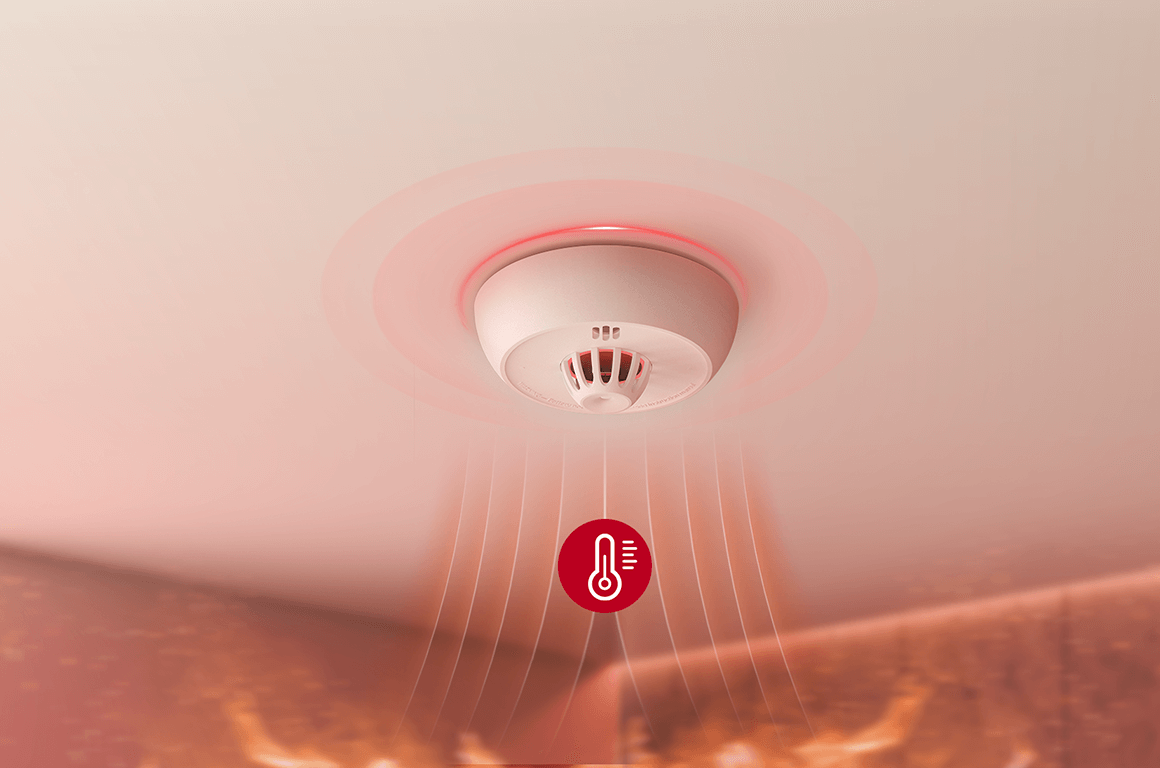
Guidance explains where temperature-based detection helps and why smoke alarms remain essential
WILMINGTON, Del., Nov. 17, 2026 — X-SENSE is outlining how heat alarms can complement smoke alarms in a household fire safety plan. The guidance describes where temperature-based detection may help without replacing required smoke alarms.
Understanding the Difference
Smoke alarms detect smoke particles and can warn occupants before temperatures rise significantly. Heat alarms respond to elevated temperatures instead. The U.S. Fire Administration identifies heat alarms as useful in some places where dust, fumes or changing conditions can cause nuisance smoke alarms, including appropriately equipped garages.
Smoke alarms still belong inside every bedroom, outside each sleeping area and on every level of the home, including basements. A heat alarm must not replace these devices.
Matching Equipment to the Room
Kitchens are one setting where homeowners may consider temperature-based detection alongside properly located smoke alarms. Laundry rooms and utility spaces can also warrant attention, depending on the equipment present, local codes and environmental conditions. Installation should follow the manufacturer’s instructions.
Garage installations require particular care. The U.S. Fire Administration recommends heat alarms rated to activate between 175 and 250 degrees Fahrenheit for garages. A device intended for a different environment may not tolerate garage temperatures or meet those recommendations.
Understanding Connected Heat Alarms
The X-SENSE XH02-M heat detector illustrates one residential heat-sensing option. Its published specifications list an NTC thermistor, a heat activation range of 129–149 degrees Fahrenheit and an operating temperature range of 40–100 degrees Fahrenheit. Those limits matter when evaluating an installation site.
The manufacturer lists a sealed, nonreplaceable battery rated for 10 years without an SBS50 base station, or seven years when connected to one. The SBS50 supports app notifications and compatible interconnected alerts through a 2.4 GHz Wi-Fi connection. App features do not replace routine testing or an emergency plan.
Making Detection Part of Everyday Safety
Residents should test alarms according to their manuals, respond promptly to fault warnings and replace devices at the stated end of service life. Keeping exits clear, maintaining appliances and practicing an escape plan remain essential steps.
A room-by-room review can help households identify gaps in existing protection and select equipment appropriate for each space.
About X-SENSE
Founded in 2013, X-SENSE has safeguarded more than 15 million households worldwide with its comprehensive range of smoke alarms, carbon monoxide detectors, and environmental sensors. Backed by international certifications and designed for long-term reliability and user convenience, X-SENSE is committed to delivering innovative safety for every home.
Media Contact
Company Name: X-SENSE ELECTRONICS LLC
Contact Person: Martin
Email: partners@x-sense.com
Website: https://www.x-sense.com/
State/Country: Delaware


