How Our Collision Repair Shop Meets Factory Repair Specifications
North Hampton, United States – March 12, 2026 / Committed Collision & Auto Body Center /
North Hampton, NH – As late-model vehicles add more high-strength materials, sensors, and driver-assist technology, collision repairs have less room for “close enough.” Committed Collision & Auto Body Center is sharing a practical look at how factory specifications shape modern repairs, from structural measuring to documented quality checks, so drivers can make informed decisions after a crash.
Modern manufacturer repair standards spell out approved methods, materials, measurement tolerances, and calibration steps for specific makes and models. These requirements are based on engineering analysis and crash testing, with the goal of restoring how the vehicle manages crash energy and how safety systems react in real-world driving. For drivers seeking auto collision repair, the key is not just how a vehicle looks at pickup, but how it performs when it matters.

Why Factory Specifications Matter After a Crash
Factory repair specifications guide what can be repaired, what must be replaced, and what must be verified before the vehicle returns to the road. That includes limits around high-strength steel and aluminum, which can require different joining methods and may restrict heating or straightening. It also includes precise structural targets that can fall outside tolerance even when panels “look” aligned.
Repair Planning Starts With Documentation and Measurement
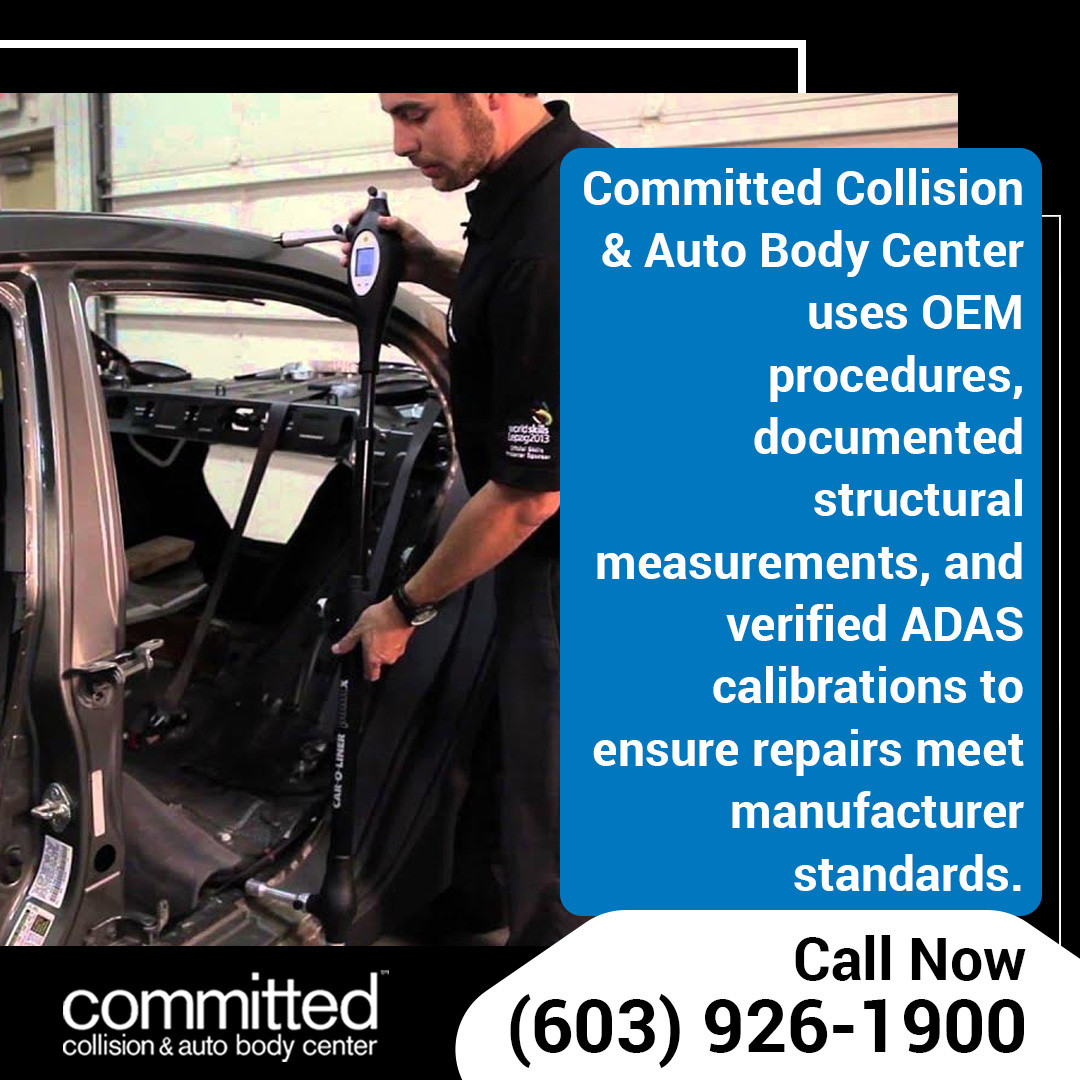
A factory-spec repair begins with vehicle-specific procedures and a detailed repair plan. That plan is built after disassembly reveals hidden damage behind bumpers, liners, and trim. Structural verification is then documented with electronic measuring equipment, before and after pulls and structural corrections. This step-by-step workflow helps a car collision repair shop identify secondary damage, avoid missed repair steps, and support accurate parts ordering.
ADAS Calibrations: Required, Coordinated, and Verified
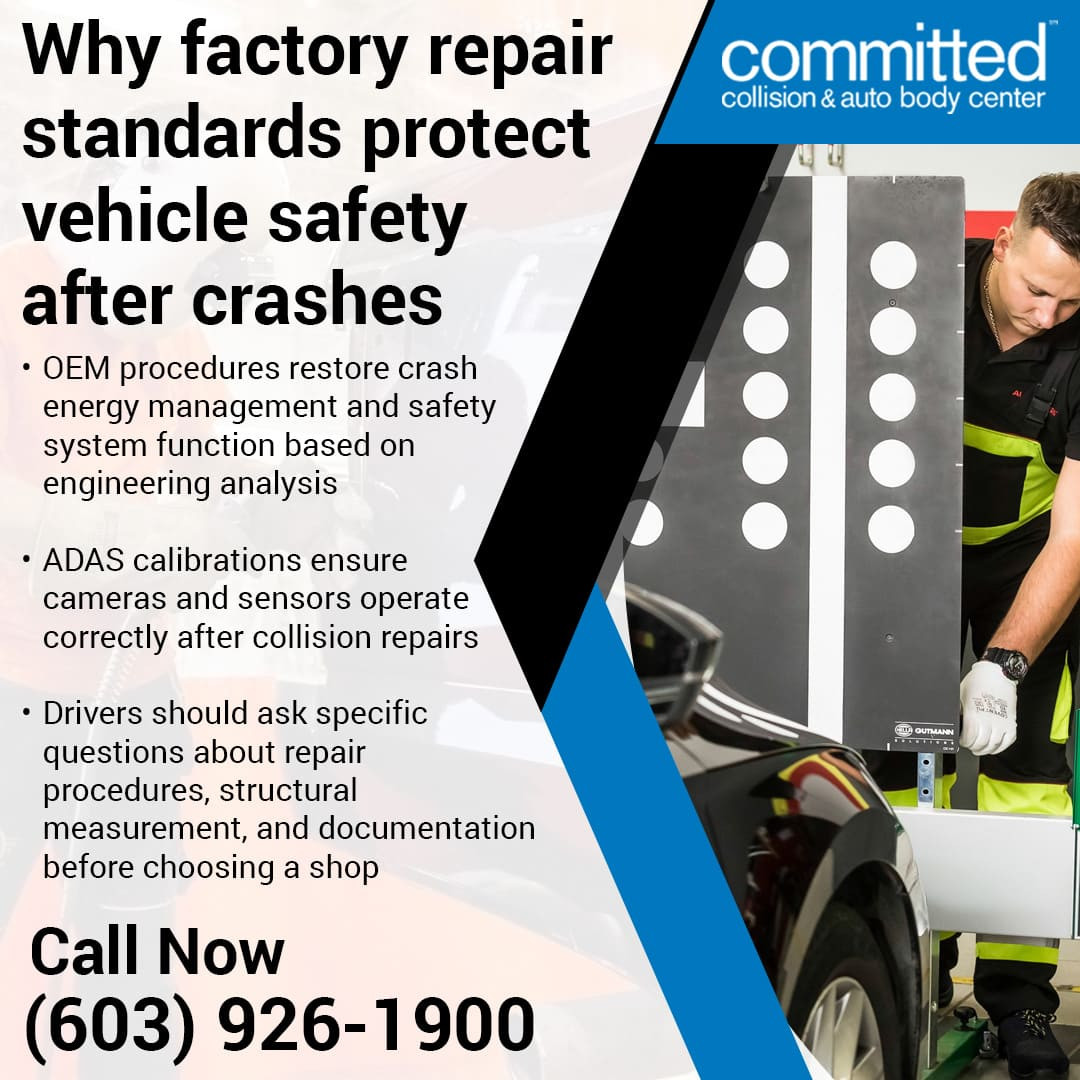
Advanced Driver Assistance Systems (ADAS) add another layer of verification after many collisions. Cameras, radar, and sensors can shift due to impact forces or panel replacement. Many repairs require calibration steps shown in OEM procedures. When calibrations are needed, they may be completed through qualified calibration providers, and the results should be verified and documented before vehicle delivery.
Federal research also highlights the safety value tied to correctly functioning crash-avoidance features. NHTSA estimates that automatic emergency braking (AEB) in heavy trucks could prevent nearly 11,500 rear-end crashes, 7,700 injuries, and 173 fatalities yearly by addressing frontal impacts where trucks strike other vehicles. While passenger vehicles differ from commercial fleets, these figures reinforce a clear takeaway: when vehicles rely on automation to warn or act, repairs must return systems to the performance the manufacturer designed.
What Drivers Should Ask a Collision Repair Specialist
Committed Collision & Auto Body Center recommends that drivers ask direct, process-based questions when choosing a collision repair specialist, including:
-
Which OEM repair procedures are used for the specific make, model, and year?
-
How is structural accuracy measured and documented during repairs?
-
What documentation is provided for required calibrations and post-repair checks?
-
What final inspection steps confirm that repaired systems and components operate as intended?
These questions help drivers compare shops based on repair discipline, not marketing claims. They also help drivers avoid body work that hides damage without restoring structure, safety system function, and repair documentation.
Committed Collision & Auto Body Center’s collision repair process emphasizes OEM procedures, documented measurements, coordinated calibration verification when required, and final inspections that support safe, consistent results for body collision repair and structural work.

Choosing Collision Repair That Meets Factory Standards
Factory repair specifications protect how your vehicle absorbs impact and how its safety systems respond. Choosing repairs that follow manufacturer procedures helps avoid hidden risks after a crash. Are you looking for the best collision repair shop in North Hampton, NH that follows OEM procedures? Contact Committed Collision & Auto Body Center at (603) 926-1900 or info@committedcollision.com to schedule an inspection and discuss a repair plan built around factory standards.
About Committed Collision & Auto Body Center
This is a family-owned collision repair facility in North Hampton, New Hampshire, founded in 2005. The shop provides auto body and collision repairs for late-model vehicles, with a focus on manufacturer repair procedures, documented structural measuring, and post-repair verification steps aligned with factory requirements.

Contact Information:
Committed Collision & Auto Body Center
203 Lafayette Road
North Hampton, NH 03862
United States
Derek Lighthall
(603) 926-1900
https://committedcollision.com/
Original Source: https://committedcollision.com/collision-repair/how-our-collision-repair-shop-meets-factory-repair-specifications/